

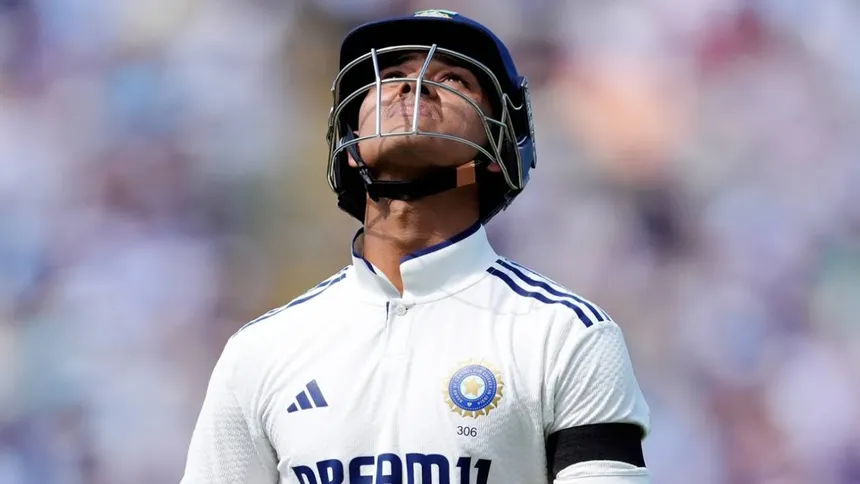
In a groundbreaking move during the ongoing fourth Test against England at Old Trafford, India made history by fielding five left-handed batters in their playing XI—Yashasvi Jaiswal, Sai Sudharsan, Rishabh Pant, Ravindra Jadeja, and Washington Sundar. This is the first time in India’s 93-year Test history that such a left-dominated batting lineup has taken the field, marking a notable shift in team composition and strategy.
Traditionally, Indian Test lineups have balanced right- and left-hand batters to disrupt opposition rhythm and offer variety across conditions. However, this match saw a bold break from convention, as India leaned heavily on left-handers to navigate the swing-friendly conditions of Manchester. Whether to counter specific bowlers or to embrace current form over handedness, the move reflects a modern, analytics-driven approach to Test cricket.
Leading the batting order were two aggressive left-handers—Jaiswal and debutant Sudharsan—tasked with facing the new ball under overcast skies. Jaiswal, already known for his attacking intent, paired well with Sudharsan, who was promoted after Karun Nair was left out. In the middle order, the explosive Rishabh Pant returned from injury, providing both wicketkeeping duties and the ability to shift gears quickly. All-rounders Jadeja and Sundar, both reliable with bat and ball, rounded out the left-hand core.
This unique composition left only KL Rahul and debutant Anshul Kamboj as right-handed batters in the side—a stark departure from India’s usual structure. The selection appears to have been based on individual form and match conditions rather than handedness alone. With swing likely to play a major role at Old Trafford, left-handers can sometimes hold an edge due to the natural angle of seam movement and fielding dynamics.
The decision also posed a direct challenge to England’s bowling strategy. With five left-handers, the home team was forced to constantly alter field placements, adjust lengths, and rethink their usual right-hander-centric plans. It also highlighted the absence of a specialist off-spinner in England’s lineup, which could have been effective against such a left-handed-heavy order.
This is not only a first in India’s Test history but also a rarity in global cricket. While teams often feature two or three left-handers, a majority left-hand lineup remains uncommon, especially in Tests. The move echoes trends seen more frequently in limited-overs formats, where match-ups and batting order fluidity are more aggressively manipulated.
India’s decision comes with risk but also opportunity. If successful, it could signal a new era of tactical innovation in Test selection, where flexibility, adaptability, and depth trump traditional norms. Early signs were positive, with the top order putting on a decent foundation, and the middle order showing intent despite challenging conditions.
As the match progresses, all eyes will be on how this left-handed experiment performs under pressure. Whether it turns into a masterstroke or a curious footnote will depend on execution. Either way, India’s five-left strategy has already made a mark—historically and tactically—showing that even in cricket’s oldest format, evolution is always at play.