

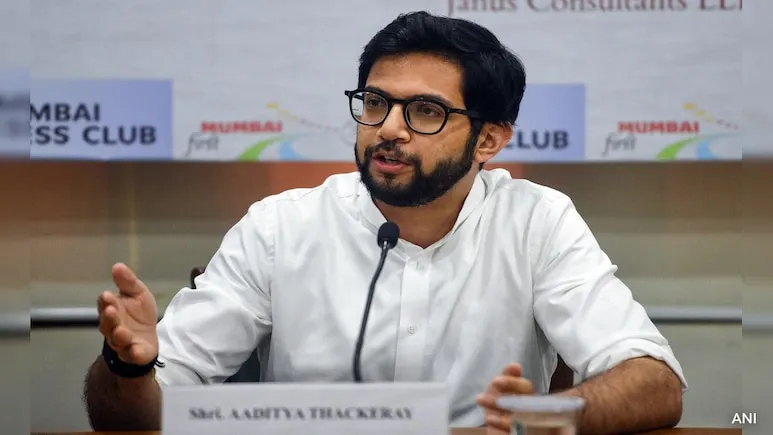
In a sharp political outburst that has stirred the cricketing community, Shiv Sena (UBT) leader Aaditya Thackeray has accused the Board of Control for Cricket in India (BCCI) of prioritising commercial gain over national sentiment by scheduling India’s Asia Cup clash against Pakistan despite recent escalations in tensions between the two nations.
Thackeray’s criticism comes against the backdrop of the recent Pahalgam terror attack and ongoing military operations targeting Pakistan-based terrorism. He asserted that the decision to go ahead with the high-profile fixture undermines the sacrifices of India’s armed forces and disregards the government’s stance against Pakistan’s actions. Citing Prime Minister Narendra Modi’s famous remark, “blood and water cannot flow together,” Thackeray claimed the BCCI’s conduct shows “greed for money stands above the sacrifice of the Armed Forces, the Nation, and even the PM’s words.”
He also dismissed arguments that the BCCI is “bound by Asia Cup rules,” pointing out the board’s considerable influence in the International Cricket Council (ICC). According to him, the decision reflects a deliberate prioritisation of broadcast revenues and sponsorship deals over symbolic patriotism. The India–Pakistan cricket rivalry, especially in major tournaments, is among the sport’s most commercially valuable events, with analysts estimating the Asia Cup fixture could generate revenue in the ballpark of ₹1,400 crore.
Thackeray’s remarks add to a growing chorus of voices calling for India to suspend cricketing ties with Pakistan until the political situation improves. Earlier, Shiv Sena (UBT) MP Arvind Sawant and other political figures had urged the BCCI to pull out of any sporting engagements with the neighbouring nation, framing it as a moral and patriotic imperative.
The Asia Cup, scheduled to be held in the UAE from September 9 to 28, is expected to feature at least one India–Pakistan clash in the group stage, with the possibility of additional encounters in the knockout rounds. While the government has not officially intervened to stop the match, public pressure on cricket administrators is mounting.
The situation encapsulates a wider conflict between the business of sports and the politics of national sentiment. On one hand, the BCCI faces irresistible commercial incentives tied to the fixture, given its global audience and sponsorship potential. On the other hand, critics argue that such matches—played in the shadow of terrorism and political hostility—risk appearing to normalise relations and dilute the symbolic significance of national sacrifices.
For now, the BCCI remains firm on its decision, but the growing political backlash indicates that the Asia Cup fixture could become more than just a sporting contest. It is shaping up to be a litmus test for how far the guardians of Indian cricket are willing to go in balancing patriotism with profitability. If tensions persist, the consequences may reverberate beyond the boundary rope, influencing both cricket governance and the country’s sporting diplomacy