

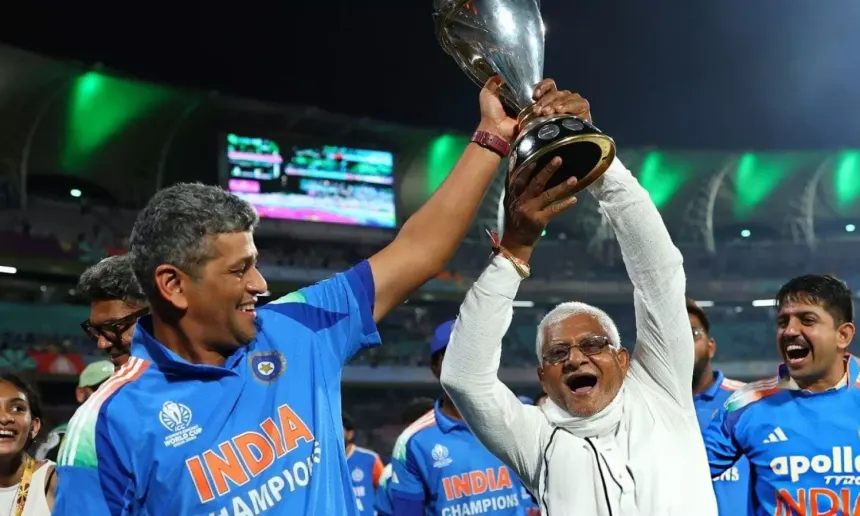
When the dust settled on the 2025 ICC Women’s Cricket World Cup final and the Indian women’s national cricket team lifted the trophy, one figure stood quietly behind the scenes — Amol Muzumdar. Once one of India’s most prolific first-class batsmen who never played a single international match, Muzumdar has now become the architect of a historic triumph, guiding the women’s team to their first-ever World Cup title and completing one of the sport’s most poetic full circles.
Amol Muzumdar’s playing career was the story of brilliance met with bad luck. Over 11,000 first-class runs, 30 centuries, and two decades of consistency — yet not a single India cap. Born in the same Mumbai system that produced Tendulkar and Dravid’s contemporaries, Muzumdar was a victim of timing. Despite his record-breaking domestic career, selectors always looked elsewhere. For years, he was the forgotten genius of Indian cricket, a man destined to be remembered as the best never to play for his country.
But Muzumdar never allowed bitterness to define him. After retirement, he turned his focus to teaching and shaping young talent. His analytical mind and patience made him one of the most respected coaches on the domestic circuit. He worked closely with IPL franchises, helped develop emerging batters, and built a reputation as someone who understood not just technique but temperament — how players think under pressure.
So when the BCCI appointed him as head coach of the Indian women’s team in 2023, it was both a bold and inspired decision. He inherited a talented but inconsistent side. Muzumdar immediately set out to instill discipline and belief. Training sessions became more tactical. Fitness benchmarks were raised. He pushed players to take ownership of their roles. More than anything, he reminded them that they weren’t underdogs anymore — they were contenders.
The transformation was visible through the World Cup campaign. India played with controlled aggression, adaptability, and composure. Muzumdar’s emphasis on reading match situations paid off — from strategic field placements to measured batting approaches. His influence was especially clear in how players like Jemimah Rodrigues and Deepti Sharma handled pressure. When India found themselves wobbling in the semi-final, the calmness in the dressing room was credited to their coach’s unflappable presence.
In the final against South Africa, India executed a near-perfect performance. Muzumdar’s decision to back the same core lineup, despite calls for rotation, proved decisive. The bowlers attacked early, the batters built partnerships patiently, and the team maintained discipline throughout. After the win, players repeatedly pointed to the environment of trust he had built — one where failure wasn’t punished but learned from.
For Muzumdar, this was more than a professional triumph. It was poetic justice. The man who never got his international debut had just guided India to a world title. His career had come full circle — from unfulfilled potential to ultimate fulfillment. Cricket, which once overlooked him, had finally given him a stage, and he delivered.
India’s women’s World Cup victory under Muzumdar is not just a landmark sporting achievement; it’s a turning point in the country’s cricket culture. It shows that success can come from the quiet minds, not just the loud reputations. And for Amol Muzumdar, it’s proof that destiny may delay recognition — but it never denies those who keep working for it.
12BET Shortlisted for Sportsbook Operator of the Year at SBC Awards 2025