

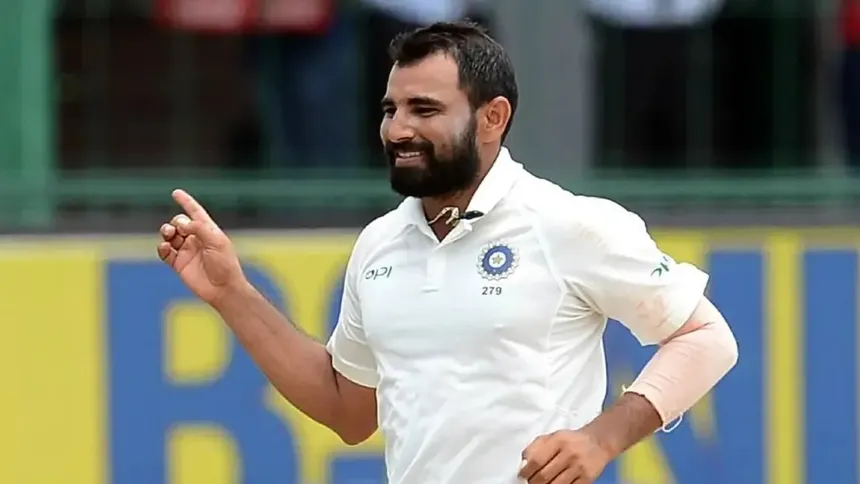
Mohammed Shami’s exclusion from India’s Test squad for the upcoming two-match series against South Africa has sparked serious discussion about whether one of India’s most seasoned fast bowlers has quietly played his final Test. At 35, Shami’s absence from the list—despite being fit and active in domestic cricket—marks a possible turning point in India’s pace-bowling strategy.
The decision came as a surprise to many within Indian cricket circles. Shami, who has been a pillar of India’s red-ball attack for over a decade, was expected to at least feature as part of the rotation group alongside Mohammed Siraj and Jasprit Bumrah. Instead, the selectors opted for younger names such as Akash Deep and Mukesh Kumar, indicating a strong preference for building a new pace core rather than relying on experience.
Shami’s numbers remain impressive. With 229 wickets in 64 Tests at an average of 27.4, he stands among India’s most efficient fast bowlers of the modern era. His ability to strike with both the new and old ball has been a major factor in India’s success at home and overseas, particularly in England, Australia, and South Africa. But the game has moved quickly since his last appearance in the 2023 season, and the selectors seem intent on future-proofing the attack.
The omission is reportedly not due to injury; Shami has been training regularly and even featured in competitive domestic matches for Bengal. That makes the decision feel less about form or fitness, and more about succession planning. India’s new Test leadership under Shubman Gill appears to be steering toward a youthful balance, one that includes developing bowlers who can handle long spells and multi-format workloads over the next five years.
Still, dropping a bowler of Shami’s pedigree without a clear explanation raises questions. He was a key figure in India’s victories abroad, capable of breaking stubborn partnerships with bursts of reverse swing. His removal from the squad now feels like a quiet shift in philosophy rather than a reflection of immediate performance. It suggests the selectors may have decided to prioritize longevity over legacy—a difficult but perhaps inevitable move in a side entering a transition phase.
For Shami, the path back into Test cricket now looks steep. With younger fast bowlers regularly being rotated and the next World Test Championship cycle already underway, he may need to produce extraordinary numbers in domestic first-class cricket to force reconsideration. At his age, that’s a tall order, particularly given India’s depth in pace options.
If this is indeed the end of his Test journey, Shami leaves behind a legacy built on precision, aggression, and relentless consistency. Few Indian pacers have combined seam control and stamina the way he has, especially in foreign conditions. Yet cricket is a game that seldom allows extended farewells—sometimes, the silence of omission says more than a formal announcement ever could.
His absence from the South Africa series may not be an official retirement, but it feels like the closing of a chapter. Mohammed Shami’s Test story might have ended not with a headline, but with a quiet omission that signals a new era for India’s fast-bowling brigade.
12BET Shortlisted for Sportsbook Operator of the Year at SBC Awards 2025