

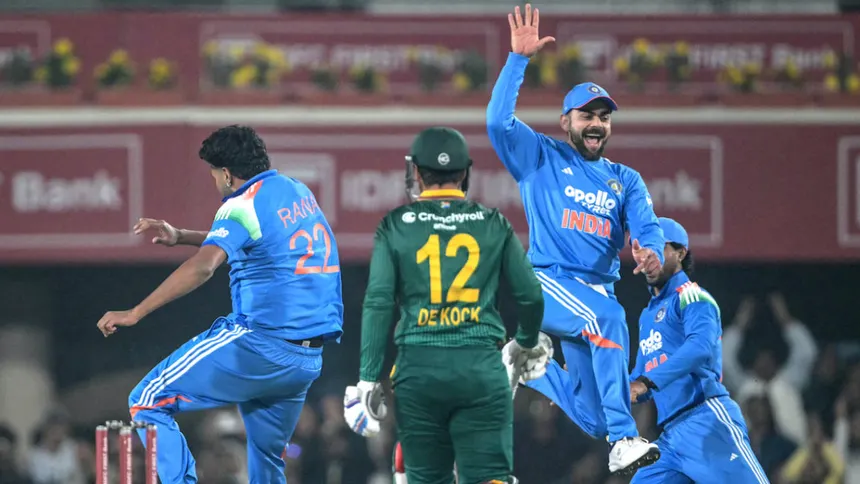
The first ODI between India and South Africa at Ranchi delivered a high-octane spectacle, highlighting both the brilliance of individual performance and the importance of experienced players in white-ball cricket. India posted a competitive 349/8, largely powered by Virat Kohli, who scored his 52nd ODI century — a 135-run masterclass off 120 balls. The innings not only anchored the chase but also underlined the value of seasoned campaigners in navigating pressure situations.
Chasing 350, South Africa put up a spirited fight, with key contributions from Matthew Breetzke (72) and Marco Jansen (70). The visitors recovered from early setbacks but struggled to maintain a consistent scoring rate. Despite a late 50-run partnership involving Corbin Bosch, India’s bowling attack, particularly Kuldeep Yadav (4/57) and Harshit Rana (2 wickets in his first over), kept South Africa just short, restricting them to 332 in 49.2 overs. The match went down to the final over, but precise death bowling from Prasidh Krishna ensured India clinched a thrilling 17-run victory.
Kohli’s century immediately sparked discussion about the enduring relevance of experienced batters in India’s white-ball setup. His ability to pace an innings, rotate the strike, and selectively accelerate under pressure was a textbook example of why seasoned players remain crucial in high-stakes encounters. In a team with younger talents like Shubman Gill and Ruturaj Gaikwad, Kohli provides both a role model and a stabilizing influence, especially in the middle overs where chases can pivot rapidly.
The win also highlighted India’s batting depth. Rohit Sharma’s 57 at the top, combined with contributions from KL Rahul (60) and Shreyas Iyer (36), ensured India could post a total that challenged even a strong South African lineup. The lower order, with Axar Patel and Washington Sundar adding 52 runs in the final overs, showcased the team’s ability to accelerate without losing composure — a critical factor in modern ODI cricket.
From a broader perspective, the victory gives India a 1–0 lead in the three-match series, setting a psychological advantage before the second ODI. South Africa will need to regroup quickly, as India has shown that the combination of experience and tactical discipline can tilt even high-scoring contests in their favor. The series also provides a platform for evaluating emerging bowlers like Harshit Rana, who impressed under pressure, and reinforces the importance of all-round contributions across batting and bowling departments.
The Ranchi ODI serves as a reminder that while explosive batting is essential in contemporary white-ball cricket, the presence of experienced, composed players like Kohli remains invaluable. Their understanding of pacing innings, handling pressure, and guiding younger teammates can be decisive in tight encounters. With the series still open, the second ODI promises another high-stakes contest where strategy, experience, and execution will all play pivotal roles.
India’s combination of stellar individual performances, collective batting depth, and disciplined bowling has set the tone for the series. Kohli’s ton was more than just a personal milestone — it was a statement about India’s reliance on seasoned players to maintain stability and competitiveness in white-ball cricket moving forward.
12BET Shortlisted for Sportsbook Operator of the Year at SBC Awards 2025