

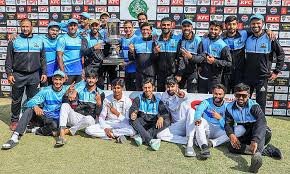
Pakistan’s 2025-26 domestic season is mid-flow, and the Quaid‑e‑Azam Trophy remains the country’s hardest grindzone — the one tournament that still filters flair from fortitude. While T20 leagues vacuum global eyeballs, Pakistan’s Test hopes continue to be tempered in multi-day cricket, under old-school conditions that demand actual cricketing IQ, stamina, and the ability to win on attrition rather than adrenaline alone.
This season, the competition is fierce because the format itself is unforgiving. Ten regional teams are playing a full round-robin schedule, culminating in a five-day final between the top two sides. The purpose isn’t spectacle — it is scrutiny. First-class innings don’t reward drive-by dominance. They reward patterns: leaving well, scoring late, bowling longer, thinking first. The pink-ball Ashes at the Gabba showed what happens when teams misjudge balance; the Quaid-e-Azam Trophy teaches players how to build it properly for red-ball survival.
And this time, emerging names are actually converting into mountains of runs. Khushdil Shah, once seen as white-ball muscle-first, has been reshaping his profile through meaningful red-ball innings that show control before compression. Knock after knock, he has shown the ability to rescue innings rather than just finish them, posting a career-best purple patch. In first-class cricket, that tells selectors more than a 15-ball cameo ever can: it says you understand innings sequencing, scoreboard tempo and recovery mindset when a pitch starts to chew. A 159, a 206, then a 95 — the kind of innings chain that makes you a Test-squad whisper, even if the numbers arrive without fanfare.
On the other side of the age spectrum, seasoned bowlers are proving why Pakistan’s red-ball cupboard isn’t empty — it just needs to be mined properly. Mohammad Abbas reminded everyone that persistence is still Pakistan’s best grassroots bowling trait. His 5/32 in one of the season’s early rounds wasn’t just a statistical achievement — it was evidence of spell design. Those wickets arrived after setting batters up for failure, not begging for it. Abbas bowls domestic cricket like a thinking assassin: tight corridors, late seam, deliberate dot-pressure that leads to tactical collapse. Pakistan always produced express bowlers like Mark Wood at peak intimidation, but the real conveyor into Tests has historically been bowlers who don’t burn out after 8 overs. Abbas is one of them, claiming his 51st first-class five-for this season — a reminder that consistent threats are built in domestic repetition, not random hostility.
Then there’s spin. Pakistan’s Test talk in 2024 worried about the spin pipeline; 2025 suggests a correction. Shoaib Bashir didn’t make the Gabba XI because England trusted an all-rounder instead, but domestic tournaments like the Quaid-e-Azam Trophy exist so Pakistan don’t have to make that call unknowingly when it’s their turn. The pitches in Rawalpindi, Peshawar, Abbottabad and Islamabad aren’t Rank Turners every round, but the surfaces do change during matches. And batters who face Kuldeep-style spin doubt or bowlers who execute long spells where drift and line defeat ego — that’s the Test-match conditioning that makes selections real, not hopeful.
Domestic cricket in Pakistan is evolving smarter too. Teams aren’t resting on badge privilege any longer. Lower-tier performances funnel into this top-flight tournament through promotion qualifiers, amplifying competition quality. That encourages regions to pick properly balanced teams, and players to perform as though every next game is career determination, not career continuation. When you consistently put high-rep innings or disciplined bowling spells on pitches that seam early, soften unpredictably, or start to turn late, you are essentially living in Test-match audition conditions.
The qualities being selected for are the ones Pakistan Test cricket historically thrived on — even when global cricket got louder. Batters like Shah Baig from the U19 era who understand captaincy humility and batting longevity; pacers who mix early hostility with late control; spinners who bowl to ego, not expectation; all-rounders who stretch total pressure rather than inflate collapse risk. Pakistan’s best ODI traits are rarely about randomness. They are about resilience sequencing and role reliability. The Quaid-e-Azam Trophy season is proving Pakistan’s selection pipeline still creates pressure players, not just pace players.
For franchises and Test selectors alike, the stage is steadily being shaped for the next wave: cricketers who don’t collapse mentally after one shock, don’t bowl themselves out emotionally in one hour, and don’t bat for galleries instead of partnerships. That’s the Pakistan formula that beat touring dynasties before — and it remains their best shot going forward.
12BET Shortlisted for Sportsbook Operator of the Year at SBC Awards 2025