

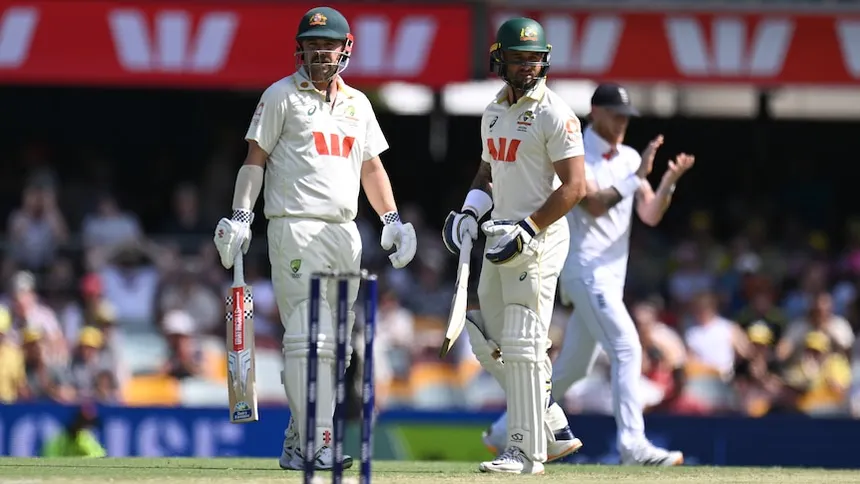
In a commanding display of top-order batting, Jake Weatherald, Marnus Labuschagne and Steve Smith laid the foundation for Australia’s strong position at stumps on Day 2 of the second Test at The Gabba. Their respective innings — 72, 65 and 61 — helped Australia reach 378/6, securing a dependable first-innings lead that sets the tone for the rest of the match.
From the outset, Weatherald provided a brisk, confident start. He played with a clear intent to dominate, punishing anything loose and rotating the strike intelligently. His 72 was anchored in timing and placement rather than brute force — crisp drives and precise placement into gaps kept the scoreboard ticking briskly. As the new ball’s shine wore off and the bowlers searched for rhythm, Weatherald’s innings had already taken the edge off England’s early pressure, giving Australia breathing room to build on.
He found able company in Labuschagne, whose 65 combined resolve and technique under pressure. As wickets began to fall elsewhere, Labuschagne held the innings together — adopting a measured approach that blended patience with occasional aggression. His footwork was disciplined, and his judgment of when to leave or play was spot on. That stability was crucial; it steadied the innings after early breakthroughs and prevented Australia from slipping into a collapse during a potentially tricky period.
When Labuschagne fell, Australia needed consolidation and someone to push the innings forward — and Steve Smith answered the call. Smith’s 61 was a masterclass in experience meeting opportunity. Against a bowling attack fresh and eager under the lights, he combined tempered defence with judicious aggression. He punished anything loose but refused to gamble recklessly, stitching together a crucial partnership that added valuable runs and time at the crease. His presence at the crease reassured his teammates and kept momentum in Australia’s favour.
Together, these three innings delivered more than just runs. They delivered context, control and a template for the innings. Weatherald set the tone; Labuschagne steadied the ship; Smith anchored the finish. Their combined effort meant Australia didn’t just survive England’s new ball bursts — they flourished despite them. At 378 for 6, Australia didn’t just post a decent total; they handed themselves the psychological initiative going into the second innings.
From a strategic standpoint, this performance matters. In a contest like the The Ashes, momentum swings frequently, but early domination — especially batting-friendly innings under lights — can shift the pressure onto the opposition. With such a lead and top-order depth shown, Australia have put England on the back foot before the second innings even begins. England’s bowlers will be under pressure to strike quickly; their batters will be chasing not just runs, but the need to counterbalance scoreboard pressure and match tempo.
For Australia, setting this kind of foundation also offers flexibility. They can choose to consolidate further, push for a big first-innings total, or manage sessions to exploit pitch wear and conditions in later days. That kind of strategic advantage — built not on one flashy knock but on collective solidity — often determines the shape of a Test series.
12BET Shortlisted for Sportsbook Operator of the Year at SBC Awards 2025