

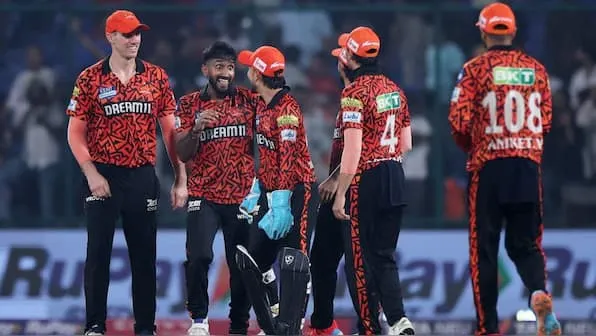
The IPL 2026 mini-auction delivered early fireworks, with marquee overseas names commanding big money and reshaping team strategies instantly. Kolkata Knight Riders (KKR) emerged as one of the boldest operators, snapping up Matheesha Pathirana for ₹18 crore and Mustafizur Rahman for ₹9.2 crore, while Sunrisers Hyderabad (SRH) strengthened their middle-order muscle by landing Liam Livingstone for ₹13 crore. Together, these moves underline a clear trend: franchises are prioritising impact players who can tilt matches in short bursts.
KKR’s biggest statement came with the acquisition of Matheesha Pathirana. At ₹18 crore, the Sri Lankan fast bowler becomes one of the most expensive overseas pacers in IPL history, and the investment makes sense. Pathirana’s slingy action, yorker accuracy, and calmness at the death have already made him a proven T20 weapon. In a league where margins are brutal in the final overs, KKR have bought a specialist who thrives under pressure. His ability to bowl wide yorkers, nail slower balls, and rush batters with pace gives KKR a genuine match-closing option — something few teams possess consistently.
Doubling down on their pace strategy, KKR also brought back Mustafizur Rahman for ₹9.2 crore. The left-armer’s cutters and off-pace variations remain highly effective on Indian surfaces, especially as pitches slow deeper into the tournament. Mustafizur offers contrast to Pathirana: where one relies on speed and yorkers, the other survives on deception and angles. Together, they give KKR flexibility across conditions — from flat batting tracks to worn surfaces where grip and variation matter more than raw pace.
These buys signal KKR’s clear philosophy: dominate the death overs with the ball. With matches increasingly decided in the last five overs, KKR are building a bowling unit designed to choke runs and force errors. It also suggests that KKR are comfortable spending heavily on specialists rather than spreading their purse thinly across multiple mid-tier options.
Meanwhile, Sunrisers Hyderabad quietly pulled off a smart, high-value signing in Liam Livingstone for ₹13 crore. Livingstone brings brute force, versatility, and tactical flexibility. He can bat anywhere from No.3 to No.6, clear boundaries from ball one, and chip in with useful spin. For SRH, who have often struggled with middle-overs acceleration, Livingstone fills a glaring gap. His presence allows SRH to maintain aggression without reckless batting, especially against spin-heavy attacks.
Livingstone’s value isn’t just about six-hitting. His ability to attack both pace and spin makes him a nightmare matchup, and his calmness in chases adds balance to an SRH lineup that has previously leaned too heavily on top-order starts. At ₹13 crore, SRH have secured a proven T20 match-winner without blowing their entire budget — a move that looks increasingly shrewd.
Zooming out, these three deals reflect how IPL franchises are evolving. Teams are no longer just chasing big names; they are targeting defined skill sets — death bowling, middle-overs power, and matchup dominance. KKR’s aggressive spending shows intent to control games with the ball, while SRH’s Livingstone buy focuses on batting impact and adaptability.
As the auction unfolds further, these signings are likely to influence bidding behaviour. Pace bowlers with death-over credentials and multi-dimensional power hitters are clearly at a premium. Early momentum belongs to KKR and SRH — and if these players deliver as expected, both franchises could be setting themselves up as serious title contenders well before a ball is bowled.
12BET Shortlisted for Sportsbook Operator of the Year at SBC Awards 2025