

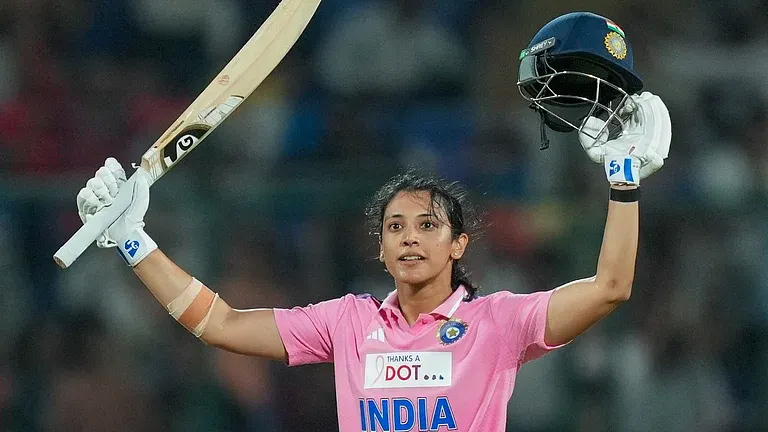
India Women put up a competitive total of 163/6, led by a fluent half-century from Smriti Mandhana, who top-scored with 54 in a disciplined batting effort. On a surface that offered enough assistance to bowlers to punish mistakes, India’s innings was built around Mandhana’s composure at the top and steady contributions through the middle order.
Mandhana set the tone early with her trademark balance between elegance and intent. Rather than forcing shots from the outset, she focused on timing and placement, picking up boundaries through gaps while ensuring the run rate stayed healthy. Her ability to find value without excessive risk allowed India to navigate the powerplay without losing early momentum.
The opening phase was crucial for India, especially against a disciplined bowling attack. Mandhana handled both pace and movement with assurance, using soft hands and precise footwork to negate swing and seam. When bowlers missed their lengths, she capitalised, driving cleanly through the off side and pulling confidently when offered width or short deliveries.
As the innings moved into the middle overs, Mandhana took on the role of anchor. With wickets falling intermittently at the other end, she resisted the temptation to over-accelerate. Instead, she ensured partnerships were built, keeping the scoreboard moving through singles and well-judged boundaries. This approach prevented India from losing shape during a phase where dot-ball pressure often leads to mistakes.
Her half-century came at a steady pace, reflecting control rather than dominance. It was the kind of innings that allowed others to play around her, giving India a platform rather than a fragile base. Mandhana’s dismissal shortly after reaching fifty was a setback, as it came at a stage where India might have hoped for a late surge.
Following her departure, India’s middle and lower order worked to push the total beyond the 160 mark. There were flashes of aggression, but also moments where bowlers regained control, keeping India from fully breaking free at the death. Still, the finishing effort was sufficient to ensure a defendable score, especially considering the pressure of a series-deciding contest.
From a tactical standpoint, India’s innings showed improved awareness. Shot selection was largely disciplined, and batters showed a willingness to adapt rather than play one-dimensional cricket. While a few more boundaries in the final overs could have made the total even stronger, 163 remained competitive enough to test the opposition.
Mandhana’s knock stood out not just for the runs, but for the clarity it brought to India’s batting. In high-pressure games, her ability to absorb responsibility and set a template is invaluable. This innings reinforced her role as the backbone of India’s top order — someone who can both stabilise and score when required.
12BET Shortlisted for Sportsbook Operator of the Year at SBC Awards 2025