

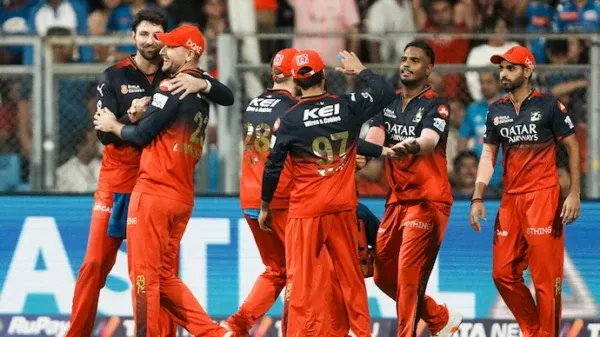
Royal Challengers Bengaluru are heading into the IPL 2026 season with a familiar but worrying narrative taking shape — fitness concerns around multiple key players. While not all reports are officially confirmed, a growing volume of pre-season chatter suggests RCB could be dealing with injuries to several first-choice names, raising questions about squad readiness before a ball has even been bowled.
Among the players most frequently mentioned are Phil Salt, Rajat Patidar, Josh Hazlewood, and Tim David — all central to RCB’s balance across formats. Individually, each injury concern might be manageable. Collectively, they point to a potential early-season vulnerability for a franchise that has historically struggled with momentum when forced into reactive selection changes.
Phil Salt’s situation is drawing particular attention. Slotted as a likely opener alongside Virat Kohli, Salt’s explosive powerplay scoring was expected to give RCB a more aggressive top-order template in 2026. Any disruption to his availability forces RCB back into familiar problems — either reshuffling the order or leaning heavily on Kohli to dictate tempo, something the team has tried to move away from in recent seasons.
Rajat Patidar’s fitness is another critical factor. Since re-establishing himself as a middle-order anchor and spin-hitter, Patidar has become one of RCB’s most reliable Indian batters. Concerns around niggles or workload management may not sound alarming in isolation, but for a side that depends heavily on a small Indian core, even short absences can distort the entire batting structure.
Josh Hazlewood’s name appearing in injury discussions is perhaps the most strategically concerning. RCB’s bowling attack has often lacked control at the death and consistency with the new ball. Hazlewood’s role is not just about wickets — it’s about discipline, experience, and leadership in pressure overs. Any uncertainty around his fitness forces RCB into less proven combinations or overexposes younger pacers too early in the season.
Tim David’s situation adds another layer of risk. Recruited to solve RCB’s long-standing finishing issues, David is valued specifically for his ability to absorb pressure and clear boundaries late. If his availability is compromised, RCB risk slipping back into the pattern of strong starts followed by underwhelming finishes — a recurring issue across multiple IPL cycles.
It’s important to stress that much of the current discussion remains speculative. Pre-season injury reports often range from precautionary rest to exaggerated timelines, and franchises typically play their cards close to the chest. However, the sheer number of names involved is what has triggered concern among fans and analysts alike.
RCB’s recent history offers a cautionary parallel. Previous seasons have shown that early instability — whether through injuries or forced experimentation — tends to snowball. Teams that start the IPL chasing solutions rarely find them quickly in a tournament as unforgiving as the league stage.
From a management perspective, this phase becomes crucial. Load management, transparent timelines, and contingency planning will define whether RCB navigate this calmly or stumble into another disrupted campaign. Squad depth exists, but the drop-off from first-choice players remains noticeable, particularly in high-pressure roles.
12BET Shortlisted for Sportsbook Operator of the Year at SBC Awards 2025