

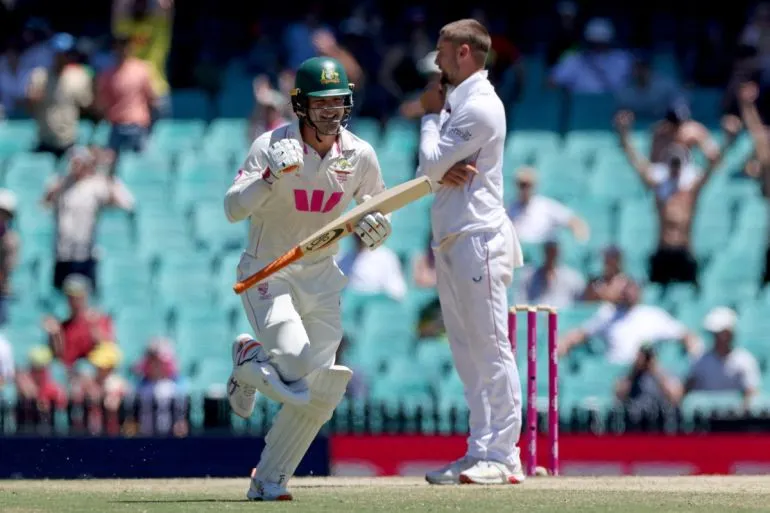
The Ashes rivalry ignited off the field at the Adelaide Test after a Snicko DRS decision overturned a caught-behind appeal against Australia’s Alex Carey, triggering accusations from England players and pundits that the technology had failed at a crucial moment. The incident quickly became one of the most debated flashpoints of the series, reopening long-running questions about the reliability and interpretation of ball-tracking audio systems.
The controversy unfolded during a tense phase of Australia’s innings. England appealed loudly for a catch behind as Carey attempted a defensive stroke, convinced there was a faint edge through to the wicketkeeper. The on-field umpire turned down the appeal, prompting England to review immediately, confident the technology would confirm their belief.
However, when Snicko was displayed, no visible spike appeared at the moment the ball passed the bat, leading the third umpire to uphold the not-out decision. Carey survived — and England’s frustration boiled over almost instantly.
From England’s perspective, the decision felt like a momentum-shifting blow. Players pointed to perceived deviations of the ball and the sound picked up by stump microphones, arguing that common sense suggested contact. Several England fielders were visibly animated, and post-session reactions made it clear the camp felt wronged.
Former England players and television pundits added fuel to the fire, questioning whether Snicko’s sensitivity settings, synchronization, or ambient noise filtering may have contributed to a misleading result. Some argued that the absence of a spike does not always mean the absence of contact, especially in conditions where bat, pad, and ground noises overlap.
Australia, unsurprisingly, took a more measured stance. Carey himself maintained he felt no edge, and the Australian camp backed the decision, pointing out that Snicko and UltraEdge have been integral to modern cricket precisely because they remove subjective judgment from tight calls.
The ICC’s position on Snicko has long been consistent: the system is designed to detect clear audio evidence, not interpret visual cues or player reactions. If no spike aligns with the ball passing the bat, officials are instructed not to infer contact. In that sense, the protocol was followed correctly — even if the outcome angered one side.
Still, the episode reignited a broader debate. Critics argue that fans and players have been conditioned to treat technology as infallible, when in reality it operates within margins of error. Microphone placement, pitch conditions, and even crowd noise can influence readings, especially for faint edges.
England’s anger was amplified by context. Carey went on to contribute valuable runs, making the decision feel even more costly in hindsight. In a series where fine margins define sessions and momentum swings can decide matches, losing a wicket opportunity in such fashion cut deep.
Supporters of technology countered that pre-DRS cricket relied entirely on human perception, which carried far greater inconsistency. Snicko, while imperfect, still offers a more objective reference point than instinct alone. The issue, they argue, lies more in expectations than in the tool itself.
The Adelaide controversy also highlighted communication gaps. Some pundits suggested broadcasters and officials could better explain how Snicko works, what constitutes a valid spike, and why some apparent edges don’t register clearly. Transparency, they believe, would reduce confusion and anger.
Ultimately, the Carey decision became another chapter in Ashes folklore — a reminder that even with cutting-edge technology, cricket remains vulnerable to dispute. The system didn’t just decide a review; it shifted emotion, narrative, and trust.
12BET Shortlisted for Sportsbook Operator of the Year at SBC Awards 2025