

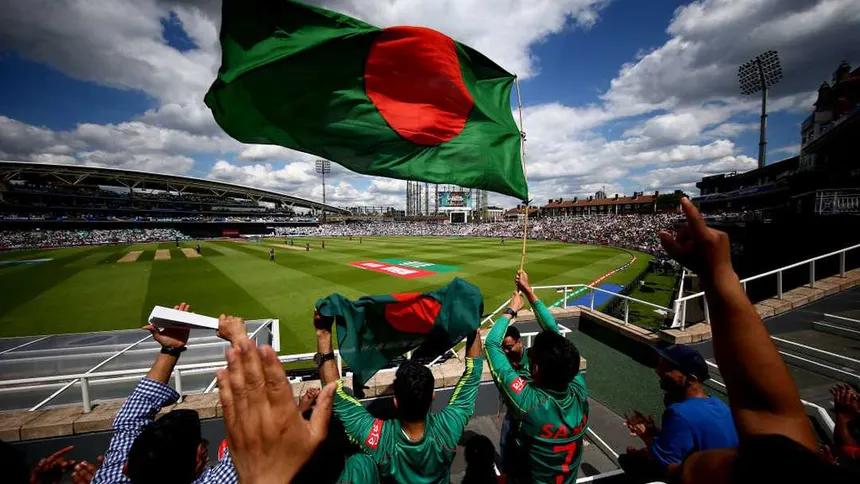
The Bangladesh Cricket Board (BCB) has intensified the ongoing venue standoff by sending another formal letter to the International Cricket Council (ICC), once again requesting that Bangladesh’s T20 World Cup 2026 matches be moved out of India. The move underlines that the issue is far from resolved and continues to sit at the intersection of cricket administration, diplomacy, and competitive integrity.
According to officials familiar with the matter, the latest communication reiterates Bangladesh’s earlier concerns regarding playing fixtures in India, citing what the board describes as persistent “venue-related tensions.” While the letter stops short of issuing any ultimatum, its tone signals that Bangladesh remains uncomfortable with the current arrangements and is seeking ICC intervention at the highest level.
This is not the first time the BCB has approached the global governing body on the issue. Previous representations were met with resistance, with the ICC making it clear that tournament schedules and host venues are decided well in advance and are not easily altered without compelling operational or security reasons. Despite that stance, Bangladesh’s decision to write again suggests internal and external pressures remain strong.
From the ICC’s perspective, the situation is becoming increasingly delicate. On one hand, the council must respect member boards and hear their concerns. On the other, it must protect the integrity of global tournaments. Allowing venue changes based on bilateral or political tensions could open the floodgates for similar demands from other nations, undermining long-term planning and consistency.
India, as a central host nation in the global cricket calendar, has so far maintained that all required protocols — including security, logistics, and infrastructure — are fully in place. There has been no indication from Indian organisers that Bangladesh would face any operational disadvantage by playing there.
For Bangladesh, the concern is not purely logistical. The repeated correspondence suggests the issue has moved beyond cricket alone, placing players and administrators in a difficult position. Cricketers themselves are rarely consulted on such matters, yet they stand to bear the consequences — whether through forfeited points, disrupted preparation, or public scrutiny.
The timing of the renewed letter is also significant. With the T20 World Cup approaching and planning entering an advanced stage, uncertainty around venues creates ripple effects for broadcasters, sponsors, and fans. The ICC is under pressure to project stability and decisiveness, especially given the commercial scale of modern global tournaments.
There is also a competitive angle. Any disruption to Bangladesh’s participation — whether through relocation, delays, or worst-case forfeiture — could directly affect tournament standings. That reality has already prompted quiet concern among other participating nations, who want clarity and a level playing field.
Behind the scenes, diplomatic channels are believed to be active, with attempts to de-escalate tensions and avoid a public showdown. However, the BCB’s choice to send another formal letter suggests those discussions have yet to produce a breakthrough.
Crucially, the ICC has previously warned that failure to fulfil scheduled fixtures could carry sporting consequences, including forfeited points. That warning still looms large, raising the stakes of Bangladesh’s continued resistance.
As things stand, the situation remains unresolved. The BCB has restated its position, the ICC has yet to publicly shift its stance, and time is slowly becoming a factor. What happens next will test the ICC’s authority, Bangladesh’s resolve, and the sport’s ability to navigate politics without damaging competition.
12BET Shortlisted for Sportsbook Operator of the Year at SBC Awards 2025