

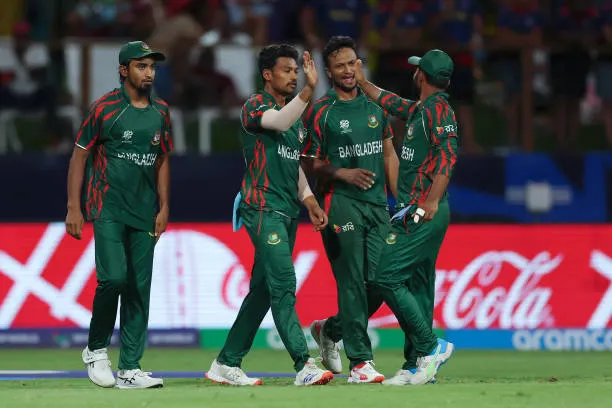
Bangladesh cricket continues to grapple with mounting off-field pressure as the countdown to the T20 World Cup intensifies, with board officials formally raising security-related concerns to the ICC. The developments have added another layer of uncertainty around the team’s preparations, coming at a time when focus and stability are critical for success at a global tournament.
According to discussions circulating within cricket administration circles, Bangladesh’s board leadership has expressed apprehension about player safety and logistical arrangements tied to tournament venues. These concerns have been communicated directly to the ICC, escalating an already sensitive situation involving scheduling, venues, and broader diplomatic undertones.
While the ICC has reiterated its commitment to ensuring player security and maintaining the integrity of the tournament schedule, the episode has once again highlighted the uneasy space Bangladesh cricket currently occupies — caught between governance decisions, external pressures, and the players’ need for clarity.
For the Bangladesh team, the timing could hardly be worse. With final squad planning, role clarity, and match-specific preparation underway, off-field uncertainty risks seeping into the dressing room. Several senior players have privately acknowledged that persistent administrative noise creates distraction, even if they remain committed to representing the country professionally.
The board’s move to flag security concerns is being viewed through multiple lenses. Supporters argue it reflects a duty of care toward players, ensuring all risks are assessed well in advance. Critics, however, believe public escalation adds pressure rather than resolves issues, potentially complicating relationships with tournament organisers and host authorities.
This is not the first instance of Bangladesh cricket being embroiled in controversy away from the pitch in recent months. Internal disputes, public disagreements, and mixed messaging from officials have contributed to an atmosphere where cricketing matters struggle to remain front and centre. The latest development only reinforces the perception of instability surrounding the team’s build-up.
From the ICC’s standpoint, maintaining consistency across the tournament is a priority. Any perception of preferential treatment or schedule alteration can have ripple effects across participating nations. As such, the governing body has stressed that security assessments are ongoing and standard protocols are in place, without indicating any immediate changes.
Within the Bangladesh camp, leadership figures are reportedly working to shield players from administrative uncertainty. Coaches and senior players are focusing on controllables — training intensity, tactical planning, and mental conditioning — while attempting to keep external narratives at arm’s length.
Former Bangladesh cricketers have expressed concern that repeated off-field episodes risk overshadowing the team’s potential on the global stage. Many believe the squad has the talent to compete strongly in the T20 format, but only if preparation is uninterrupted and trust exists between players and administrators.
The broader issue extends beyond this single tournament. How the situation is handled could shape Bangladesh cricket’s relationship with global governing bodies going forward. Transparent communication, measured public messaging, and internal alignment are now being viewed as essential steps to restoring calm.
As the T20 World Cup approaches, the spotlight will remain firmly on how Bangladesh cricket navigates these challenges. Whether the team can compartmentalise the noise and deliver performances on the field may ultimately define not just their campaign, but the direction of Bangladesh cricket in the years ahead.
12BET Shortlisted for Sportsbook Operator of the Year at SBC Awards 2025