

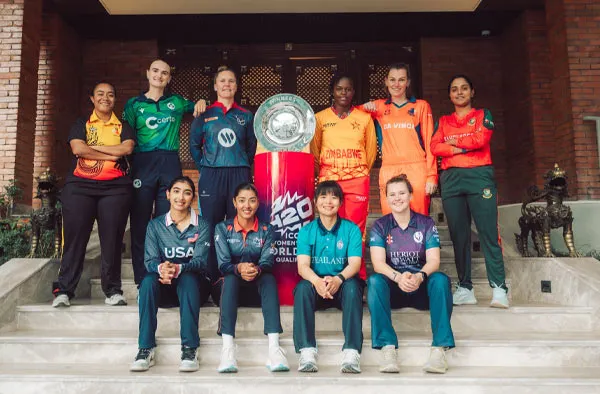
The ICC Women’s T20 World Cup Qualifier 2026 officially got underway in Nepal, marking the start of a crucial tournament that will determine which teams earn a place at the 2026 ICC Women’s T20 World Cup. With group-stage round-robin matches now in progress, the competition represents a major opportunity for emerging and associate nations to break into the elite level of women’s international cricket.
Nepal’s hosting of the qualifier is itself a significant milestone. The country has steadily grown its cricketing infrastructure and profile in recent years, and staging a global ICC event reflects that progress. Matches are being played in conditions that test adaptability, with pitches expected to reward disciplined bowling, smart batting, and strong running between the wickets rather than pure power alone.
The qualifier features a group round-robin format, ensuring each team gets multiple opportunities to prove itself rather than relying on a single knockout result. This structure places a premium on consistency, squad depth, and tactical awareness across several matches. Teams must manage workloads carefully while also maintaining momentum throughout the group stage.
For many participating sides, this tournament is about more than just qualification. It is a platform to showcase the rapid development of women’s cricket beyond the traditional powerhouses. Several teams arrive with a mix of experienced campaigners and young players eager to make a mark on the international stage. Strong performances here could open doors to greater exposure, funding, and future bilateral opportunities.
Early matches have already highlighted the competitive balance within the field. While some teams entered the tournament as favourites based on rankings and recent results, others have shown they are capable of challenging expectations through disciplined bowling and fearless batting approaches. Close finishes and tactical battles have reinforced the growing depth in the women’s game.
From a broader ICC perspective, the qualifier plays a key role in the global growth strategy for women’s cricket. By expanding the World Cup pathway and giving more nations a realistic shot at qualification, the ICC continues to push for wider participation and competitiveness. The Nepal event also emphasizes the importance of hosting tournaments in developing cricket nations, helping to inspire local players and fans.
Conditions in Nepal are expected to influence team strategies as the tournament progresses. Captains will need to make smart calls around team selection, particularly balancing spin and pace options. Fielding standards and game awareness in pressure moments are likely to be decisive, especially in matches where margins are slim.
As the group stage unfolds, attention will increasingly turn to qualification scenarios, net run rate calculations, and head-to-head results. Every over, boundary, and wicket could prove decisive in determining which teams advance to the final stages and keep their Women’s T20 World Cup 2026 dreams alive.
12BET Shortlisted for Sportsbook Operator of the Year at SBC Awards 2025