

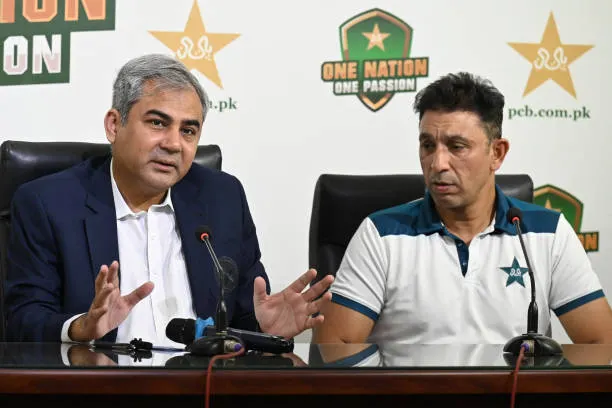
The Pakistan Cricket Board (PCB) has taken a significant and politically sensitive step by pausing its preparations for the ICC Men’s T20 World Cup 2026, publicly aligning itself with Bangladesh’s stance in the ongoing dispute over tournament venues and participation. The move has added a new layer of complexity to an already tense situation involving cricket governance, geopolitics, and the ICC’s authority.
According to developments, the PCB has decided to review its planning roadmap for the World Cup while closely monitoring how the situation between the ICC and the Bangladesh Cricket Board (BCB) unfolds. This does not amount to an immediate withdrawal from the tournament, but it is a clear signal that Pakistan is willing to reassess its position if concerns raised by Bangladesh remain unresolved.
At the heart of the issue is Bangladesh’s refusal to play its scheduled T20 World Cup matches in India, citing security concerns and broader diplomatic tensions. The ICC has so far stood firm, rejecting requests to relocate matches outside India and warning of consequences such as forfeited points. Pakistan’s decision to publicly support Bangladesh represents a rare show of solidarity between two Full Member boards on a contentious governance matter.
The PCB’s stance is notable because Pakistan itself has extensive experience navigating politically sensitive cricketing disputes. By backing Bangladesh, the PCB appears to be positioning itself as an advocate for what it describes as “player security, board autonomy, and fair treatment,” rather than simply aligning with ICC directives without question.
Internally, PCB officials have indicated that preparatory activities—such as logistical planning, venue simulations, and bilateral warm-up coordination—have been temporarily slowed rather than fully halted. The board is reportedly using this pause to evaluate possible scenarios, including changes to venues, scheduling adjustments, or ICC intervention at a higher diplomatic level.
This development raises broader questions about the ICC’s ability to manage multinational tournaments in politically charged environments. While the ICC maintains that cricketing schedules should not be influenced by bilateral political disputes, the PCB’s move suggests that member boards are increasingly willing to challenge that position when they believe core concerns are being sidelined.
From a competitive standpoint, Pakistan’s pause introduces uncertainty into a team that is traditionally among the strongest T20 sides globally. With the tournament drawing closer, preparation time is critical, and any prolonged delay could have on-field consequences. However, the PCB appears willing to absorb that risk to make a broader point about governance and mutual respect among member nations.
Reactions across the cricketing world have been mixed. Some observers view Pakistan’s move as a calculated pressure tactic aimed at forcing renewed dialogue within the ICC. Others worry it could set a precedent where boards use major tournaments as leverage, potentially destabilizing future global events.
For now, the PCB has stopped short of issuing ultimatums. Officials have emphasized that Pakistan remains committed to international cricket and hopes for a “workable, inclusive resolution” that addresses Bangladesh’s concerns without undermining the tournament’s structure.
As the standoff continues, Pakistan’s decision has shifted the narrative from a bilateral Bangladesh–ICC disagreement to a wider governance challenge. Whether this leads to compromise, confrontation, or quiet back-channel negotiation will likely shape not only the T20 World Cup 2026, but also how international cricket handles geopolitical realities in the years ahead.
12BET Shortlisted for Sportsbook Operator of the Year at SBC Awards 2025