

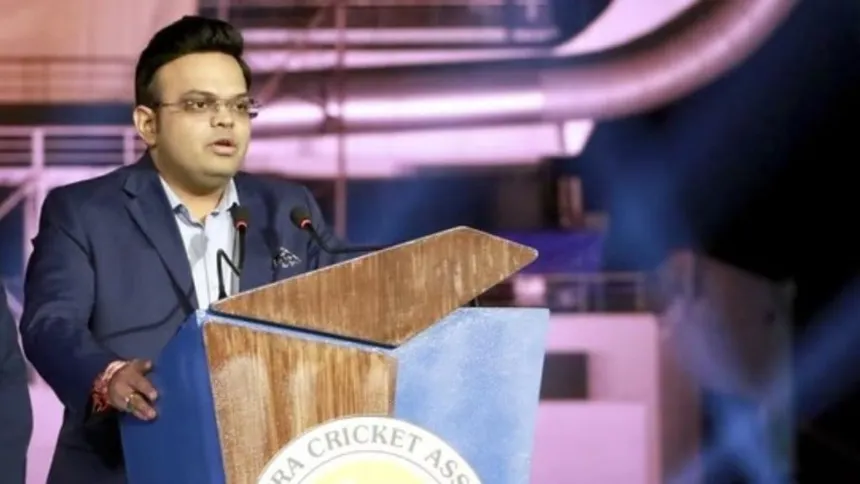
The standoff between Bangladesh Cricket Board (BCB) and the International Cricket Council (ICC) over participation in the ICC Men’s T20 World Cup 2026 in India has escalated further, with reports suggesting ICC Chairman Jay Shah is considering strict action if Bangladesh continues to refuse to travel. What began as a scheduling and venue-related disagreement is now edging into a full-blown governance crisis with serious consequences.
According to developments around the ICC, patience is wearing thin at the highest level. The tournament schedule has been finalized, venues approved, and operational planning is already deep into execution mode. From the ICC’s standpoint, Bangladesh’s continued refusal threatens not just one series of matches but the integrity and credibility of a global event.
Jay Shah’s position is understood to be firm: the T20 World Cup cannot be held hostage by unilateral decisions from a member board once due process has been followed. India’s venues, including Eden Gardens where Bangladesh were set to play most of their matches, have already received ICC clearance. Security assessments and logistical checks have also been completed, weakening Bangladesh’s argument from an ICC governance perspective.
The potential actions under consideration range from financial penalties and loss of tournament revenue share to more severe outcomes such as points forfeiture, forced withdrawal, or disciplinary proceedings under ICC regulations. While no final decision has been announced, the fact that such measures are even being discussed signals how seriously the ICC views the situation.
For the ICC, the issue extends beyond Bangladesh alone. Allowing one team to opt out of a World Cup hosted by a full-member nation after formal approvals would set a dangerous precedent. Other boards could follow suit in future tournaments, undermining long-term planning, broadcast agreements, and host nation investments.
Internally, Bangladesh’s position is becoming increasingly complicated. Players have publicly and privately expressed a strong desire to participate in the World Cup, viewing it as a career-defining event. The growing gap between player sentiment and board policy is adding pressure on the BCB, especially as the ICC hardens its stance.
There is also political sensitivity surrounding the matter, which makes resolution more complex. Bangladesh has framed its reluctance as being driven by broader considerations rather than cricketing logistics alone. However, the ICC operates on cricket governance rules, not bilateral diplomacy — a distinction that lies at the heart of the current impasse.
Jay Shah’s involvement elevates the stakes. As ICC Chairman, his role is to protect the tournament’s structure and enforce uniform standards across member boards. Any perception of leniency could weaken the ICC’s authority at a time when global cricket governance is already under scrutiny.
From India’s side, the message has been consistent: the country is prepared to host, and the ICC has validated that readiness. With other teams committed and planning underway, there is little appetite to revise schedules or relocate fixtures at this stage.
As deadlines approach, Bangladesh faces a narrowing set of options. Compromise could defuse the situation and preserve their place in the tournament. Continued defiance, however, risks pushing the ICC toward enforcement — a move that could carry long-term consequences for Bangladesh cricket beyond just the 2026 World Cup.
For now, the cricket world watches closely. What happens next will not only determine Bangladesh’s participation, but also test how firmly the ICC is willing to assert its authority when a member board challenges the system at the biggest stage.
12BET Shortlisted for Sportsbook Operator of the Year at SBC Awards 2025