

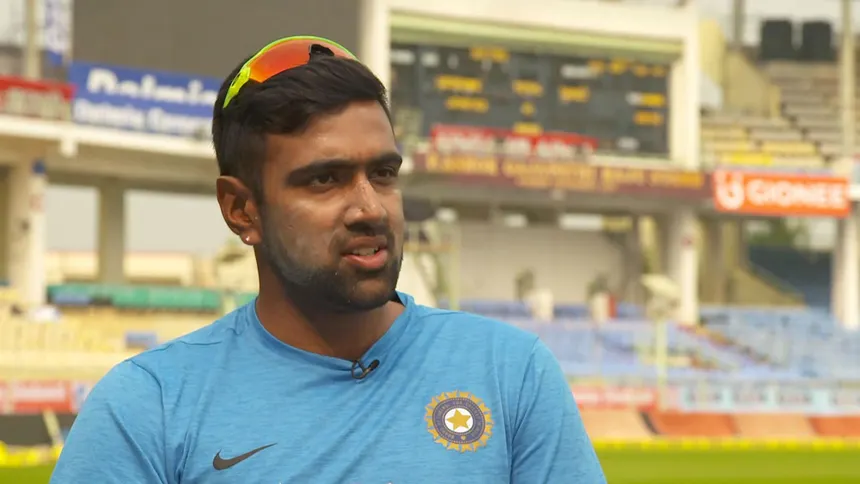
Ravichandran Ashwin has sparked debate with his blunt dismissal of the Asia Cup’s relevance for Indian cricket. Speaking with characteristic candour, the veteran spinner remarked that the competition is “not a curtain raiser, it’s only a curtain,” raising questions about the value of the event as a genuine preparatory ground ahead of tougher global challenges.
Ashwin’s critique points to a long-standing issue: while the Asia Cup is a prestigious regional tournament, it rarely provides India with the kind of competitive edge required before world events. For decades, India has entered as favourites, often facing uneven matchups that do little to expose players to the rigours of pressure situations. His words suggest that the tournament, instead of sharpening India’s game, risks becoming a ceremonial warm-up lacking genuine intensity.
The disparity between participating teams is at the core of his criticism. With India, Pakistan, and Sri Lanka traditionally dominating, and associate nations still finding their footing, the gulf in standards often turns contests into one-sided affairs. For a team like India, aiming to prepare for the World Cup stage, such games may build confidence but fail to replicate the heat of true global competition. Ashwin’s frustration reflects the need for more high-calibre opposition if players are to be truly tested.
That being said, the Asia Cup is not without merit. It provides newer leaders like Suryakumar Yadav with opportunities to captain under spotlight, helps selectors experiment with combinations, and delivers exposure to younger cricketers who feel the weight of representing India in front of massive crowds. The India-Pakistan rivalry alone ensures a level of intensity that transcends the tournament’s structure. Still, Ashwin’s point is that these sporadic moments don’t equate to consistent high-level cricket needed for serious preparation.
His remarks also ignite a larger conversation about the international calendar. With players already burdened by back-to-back tours, bilateral series, and franchise leagues, the Asia Cup risks being seen as an obligation rather than an opportunity. If its role is to prepare teams for major ICC tournaments, then its competitiveness must be ensured—either by restructuring formats, inviting stronger international sides, or reimagining scheduling to avoid fatigue and predictability.
For now, Ashwin’s statement resonates as both a critique and a warning. India cannot afford to mistake ceremonial dominance in regional cricket for readiness on the world stage. Winning the Asia Cup may bring headlines, but the ultimate tests lie in the World Cup arenas where Australia, England, South Africa, and others will push India to its limits.
In the end, Ashwin’s sharp metaphor captures a truth often glossed over: a curtain may cover the stage, but it doesn’t prepare the actors for the performance. For India, the Asia Cup might bring drama, but the real theatre still awaits elsewhere.
12BET Shortlisted for Sportsbook Operator of the Year at SBC Awards 2025