

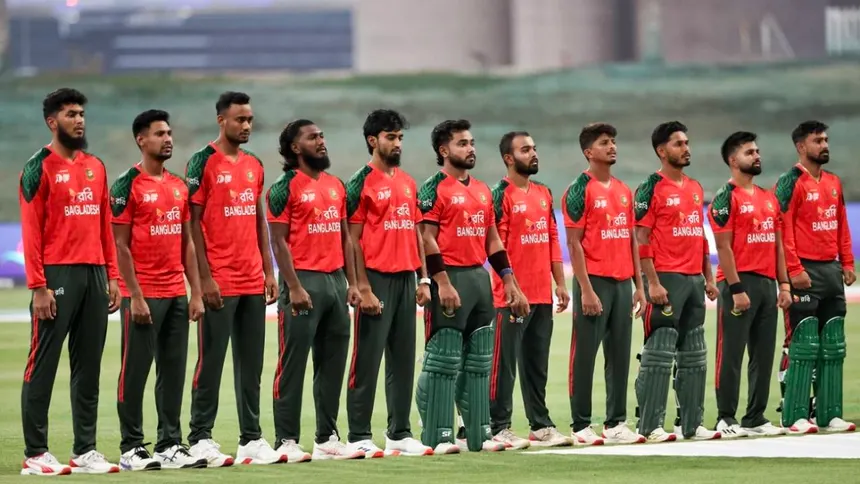
Bangladesh has escalated its dispute with the International Cricket Council (ICC) by publicly reaffirming its refusal to play ICC Men’s T20 World Cup 2026 matches in India, rejecting what the board described as “unreasonable conditions” attached to hosting and participation. The development represents one of the most serious off-field controversies in global cricket this year — threatening tournament cohesion, testing governance structures, and raising fundamental questions about how international events are administered amid political and security concerns.
At the heart of the standoff is Bangladesh’s longstanding concern about playing matches on Indian soil due to perceived security and logistical issues. These concerns have been aired by the Bangladesh Cricket Board (BCB) over weeks of deliberation, but recent communications suggest the board believes its objections were neither adequately addressed nor respected by the ICC.
In its latest statement, the BCB cited a failure by the ICC to meaningfully negotiate or create mutually acceptable terms for Bangladesh’s participation in the scheduled India fixtures. Officials described certain caveats proposed by the ICC as “unreasonable,” though specifics were not publicly outlined. The rejection signal is clear, however: Bangladesh will not play under terms it views as compromising player safety, board autonomy, or national interest.
This marks a significant escalation from earlier, more private diplomatic exchanges to an open, public dispute. The BCB’s stance has quickly reverberated across cricket communities and media, provoking debate about the limits of administrative fiat versus the autonomy of member boards in global tournaments.
From the ICC’s perspective, its approach has been anchored in the principle that scheduled venues and fixtures — once ratified — form the binding blueprint of a World Cup. ICC officials have repeatedly emphasised that matches must be played as per the approved schedule unless there is an independent, verified, and objective security directive that necessitates relocation. According to the ICC, no such directive has emerged, leaving their position technically intact.
Bangladesh’s public rejection of “unreasonable conditions” — even if not fully detailed — amounts to a rhetorical challenge to that framework. It places pressure on the ICC to either justify its conditions with clarity or explore alternative arrangements, even if politically or logistically fraught. Cricket administrators and analysts are watching closely, with some arguing that the situation exposes weaknesses in the way global governance handles bilateral political sensitivities.
The controversy also raises questions within Bangladesh’s own cricket ecosystem. Players and support staff are caught in the middle of administrative disputes, with potential impacts on morale, preparation, and tournament focus. While no player has openly defied the board’s position, inside sources suggest that athletes would prefer clarity and certainty over prolonged debate. Training camps, travel plans, and strategic preparation hinge fundamentally on knowing where and when matches will be played.
On the fan side, the drama has divided opinion. Some supporters applaud the board’s firm rhetorical stance on sovereignty and security; others worry it could lead to forfeited matches, points penalties, or worst-case exclusion from fixtures — outcomes that would harm Bangladesh cricket’s competitive progress.
Globally, the issue now draws scrutiny of how politically charged disputes interact with tournament governance. With major ICC events scheduled years in advance, member boards and the governing body alike face the challenge of reconciling sporting commitments with external pressures — whether geopolitical, diplomatic or security related.
As matters stand, Bangladesh’s reiterated refusal to play in India is not a minor protest but a major controversy — one that could have lasting implications for the T20 World Cup 2026, the ICC’s authority, and how large-scale cricket events are administered in politically complex environments.
12BET Shortlisted for Sportsbook Operator of the Year at SBC Awards 2025