

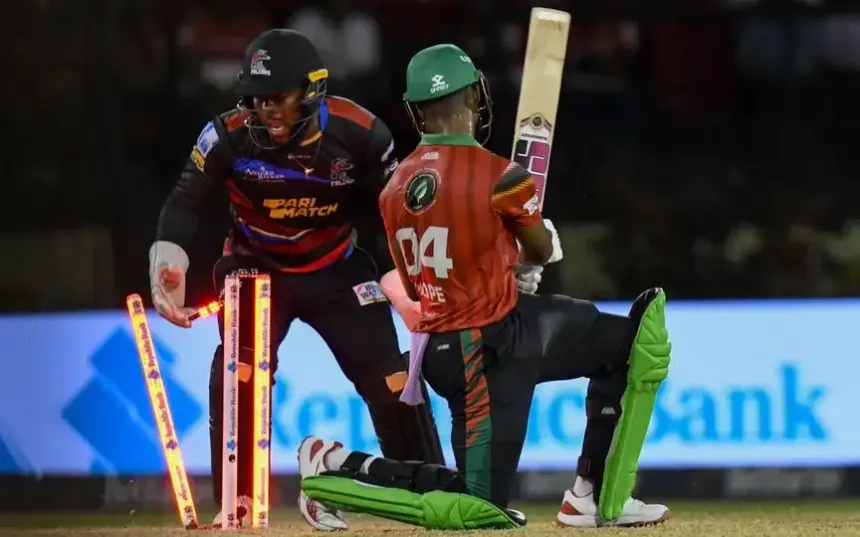
The Caribbean cricket season is moving, noisy, crowded, and very much alive — even if it isn’t making front pages the way international Tests or T20 leagues do. The ongoing 50-over competition, the 2025–26 Super50 Cup, is proof that the region’s batting and bowling pipelines are still producing stories worth hearing. This tournament, run under the umbrella of Cricket West Indies, reflects a crucial truth: you don’t need a marquee international fixture to measure cricket health. You need structure, opportunity, volume and competitive bite — all of which the Caribbean domestic circuit currently has.
Unlike Test cricket, where collapses are sliced into five-day narratives and every innings carries legacy weight, the Super50 Cup is raw, pacey, compact and unforgiving in a different way. It is a developmental colosseum where every batter pushed into the middle must justify a 120-ball craft plan, and every bowler must defend or distort 50-over arithmetic. This is the region’s longest domestic limited-overs format, feeding directly into future West Indies Cricket Team selection ideas for ICC tournaments, bilateral series and global qualifiers.
The Super50 Cup has historically acted as a filtering mechanism for players who thrive when the ball seams early or sticks a touch mid-innings. While Test cricket in the Caribbean has struggled to hold global audience share, domestic cricket has quietly — stubbornly — refused to yield. There are structural reasons for this. Caribbean cricket thrives on regional rivalries embedded into the DNA of island representation. Every squad is more than a team; it’s a micro-nation, carrying accents of place identity, community sponsorship, and inter-island bragging rights older than most international bilateral histories.
The tournament’s competitiveness is fueled by teams such as Barbados Pride, Trinidad & Tobago Red Force, Guyana Harpy Eagles, Jamaica Scorpions, the Windward Islands Volcanoes, and the Leeward Islands Hurricanes. Each one plays for a tangible audience — local stadiums still fill, rival commentators still roar, and young cricketers still track heroes who graduate from this format into the international vertical.
This Super50 season sits at a time when 50-over cricket itself is going through a global identity check. Franchise T20 leagues swallow calendars and buy eyeballs by the billion, and we’re heading toward an era where Test cricket belongs to a narrative elite, but 50-over competitions still matter because they bridge both extremes: they demand technique and storytelling but also deliver brevity and product value. The Caribbean has kept that bridge intact longer than most regions that prematurely collapsed into format polarization.
The results matter, but the implications matter even more. Players emerging from Super50 spells are being evaluated not only on talent, but on durability — can they build partnerships beyond 40 overs? Can they survive early collapse cycles? Can they bowl death overs where 12 runs feel as ruthless as a Test wicket? The region, more than most, knows that international dominance is built on players molded at home who understand all three states of pressure: building a total, defending a total, or killing a chase.
More importantly, the tournament reveals a broader cultural and strategic dynamic often missed by global media coverage: the Caribbean still treats cricket as national mood, not strictly commercial product. That’s a strength, but it’s a double-edged sword. The world’s cricket economy is dominated now by privatised leagues, stake sales, streaming partnerships and globalised venue rotations. Caribbean cricket must eventually plug its domestic energy into global distribution channels without losing its identity. If it can’t, these tournaments will continue to be noisy in stadiums but silent on balance sheets — a reality that helps on-field inspiration but hurts long-term growth.
The question isn’t whether Caribbean domestic cricket is active — it obviously is. The question is how fast it commercializes without corrupting itself. The region needs investment scale similar to what leagues like Indian Premier League and the Big Bash League command, but it also needs the regional soul only Caribbean cricket currently possesses.
The 2025–26 Super50 Cup is not a sideshow — it’s the operating system under the surface, where West Indies cricket is re-educating its future generation. The gears are still turning, the pitches are still visited, and India isn’t the only place where red-ball reputations can break or rebuild. In the Caribbean, cricket didn’t pause for criticism. It simply kept spinning its story forward.
12BET Shortlisted for Sportsbook Operator of the Year at SBC Awards 2025