

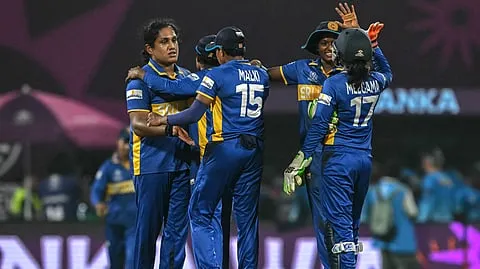
Sri Lanka Women put up a spirited batting effort in the second ODI, but despite a fighting 72 from Chamari Athapaththu, they were bowled out for 230, a total that ultimately proved insufficient against a composed Indian chase. Athapaththu’s innings stood out as a display of leadership and resistance in an otherwise challenging outing for the Sri Lankan batting unit.
Batting first, Sri Lanka knew they needed a competitive score to put pressure on India, especially after losing the opening ODI. Athapaththu, as captain and senior batter, took responsibility early. She approached her innings with clarity, balancing caution with aggression, and quickly established herself as the anchor around whom the innings revolved.
Her knock was built on determination rather than dominance. Against a disciplined Indian bowling attack, Athapaththu focused on placement and strike rotation in the early stages. She avoided unnecessary risks, understanding that time at the crease was crucial if Sri Lanka were to post a respectable total. Boundaries came through timing and smart shot selection rather than brute force.
As wickets fell at the other end, the pressure on Athapaththu increased. Sri Lanka struggled to build long partnerships, and the run rate threatened to stall during the middle overs. Athapaththu responded by taking calculated risks, using her experience to pick moments to attack. Her footwork against spin allowed her to disrupt the bowlers’ lengths, while her strength through the leg side ensured the scoreboard kept moving.
Reaching her half-century was a significant moment, not just personally but for the team. It provided Sri Lanka with stability and belief that a competitive total was still within reach. Athapaththu continued to marshal the innings, guiding younger batters and shielding them from pressure when possible.
However, the lack of support around her proved costly. Regular wickets meant Sri Lanka were unable to capitalize fully on Athapaththu’s platform. As the innings entered the final phase, the responsibility of accelerating fell heavily on her shoulders. While she did manage to lift the tempo, the absence of sustained partnerships limited the overall impact.
Athapaththu’s dismissal for 72 marked a turning point. Once she was removed, Sri Lanka’s innings lost direction. The remaining batters found it difficult to handle India’s disciplined bowling and sharp fielding, and the scoring rate dipped noticeably. India seized control, cleaning up the tail efficiently to bowl Sri Lanka out for 230.
From India’s perspective, the bowling effort was clinical. While Athapaththu posed a consistent threat, India’s bowlers stuck to their plans, avoided gifting easy boundaries, and capitalized when opportunities arose. Their ability to strike at key moments ensured Sri Lanka were always playing catch-up.
For Sri Lanka, the total of 230 was competitive but not commanding. Athapaththu’s innings gave them a fighting chance, but in modern ODI cricket, such totals often require exceptional bowling performances to defend. Against a strong Indian batting lineup, the margin for error was slim.
12BET Shortlisted for Sportsbook Operator of the Year at SBC Awards 2025