

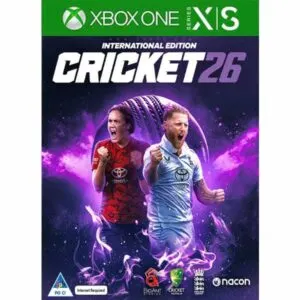
The release of Cricket 26 on 20 November has pushed the genre into a sharper, more contemporary space, aiming to bridge the gap between simulation accuracy and quick-hit accessibility. Available across PS5, PS4, Xbox Series, Xbox One, and PC, the title arrives at a time when cricket gaming desperately needed a meaningful upgrade, and it delivers just enough evolution to get players talking—even if not every piece falls cleanly into place.
At its core, the game doubles down on authenticity. Stadium lighting, weather transitions, and pitch aging have all taken a visible step forward. You’re no longer dealing with flat, predictable surfaces; the pitch now forces a rethink every few overs as cracks widen, moisture evaporates, and bowlers gain or lose assistance. It’s the first iteration in the series where spinners feel consistently relevant outside the subcontinent, and swing bowlers operate with a more believable risk–reward dynamic rather than arcade-like extremes.
Batting has been overhauled with smoother footwork animations and more decisive back-and-across movements, giving the player better control during both defensive and aggressive strokes. Mistiming still punishes you, but it no longer feels randomly harsh. The window for precision is fair; if you commit early and read the length, the game rewards you with clean ball contact. Power hitting is also toned just enough to prevent every middle-order batter from playing like a franchise league superstar, grounding innings in a more realistic scoring tempo.
Career Mode remains the heart of the experience. You start from scratch, grinding domestic cricket, navigating selection politics, form streaks, and fatigue management. While the system occasionally feels familiar, the new training progression model makes development more deliberate instead of allowing players to max out skills with mechanical repetition. Choices matter—specializing as a swing bowler, wrist spinner, anchor batter, or power-play aggressor genuinely shapes how you’re used in domestic and international fixtures.
Licensing is mixed but workable. The Ashes branding provides a strong backbone, and the presentation around the marquee rivalry carries real weight. Broadcast-style replays, commentary depth, crowd noise variation, and the entire pre-series hype package create an immersive environment. But outside the headline licenses, some teams still rely on generic kits or approximated squads. The community creation tools soften the blow, yet it’s a gap the series still hasn’t fully solved.
Where Cricket 26 genuinely shines is match immersion. Fielding animations are crisper and less robotic, especially in boundary diving and relay throws. AI captains also behave with improved logic—switching bowlers, adjusting fields, and reacting to momentum shifts with far more realism than previous titles. Long-form matches feel like actual battles of attrition, not endurance tests held together with scripted events.
Performance across platforms is largely stable. PS5 and Xbox Series users get smoother frame pacing, faster loading, and better shadows, while older consoles hold up decently, though with a few texture downgrades. PC players finally have a title that doesn’t require endless tweaking to maintain consistency.
In the end, Cricket 26 lands as the most grounded, technically confident entry the series has produced. It’s not flawless—but it’s clearly built with intent, sharper realism, and a long-term view of what cricket gaming should become rather than what it has been.
12BET Shortlisted for Sportsbook Operator of the Year at SBC Awards 2025