

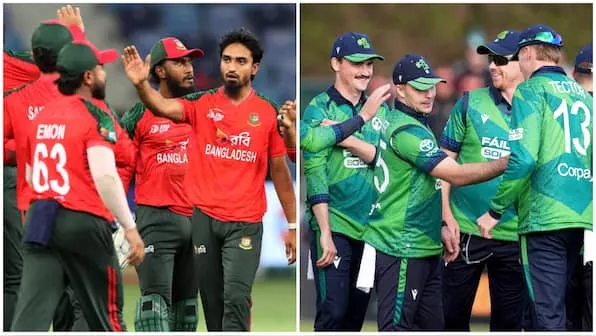
Cricket Ireland has firmly rejected a proposal to alter ICC Men’s T20 World Cup groupings, shutting down any possibility of a group swap that emerged amid Bangladesh’s scheduling dispute ahead of the tournament. The decision reinforces Ireland’s stance on maintaining competitive integrity and preserving the original structure agreed upon by all participating nations.
The controversy surfaced after concerns were raised about Bangladesh’s match schedule, with suggestions floated in certain quarters that a group reshuffle could ease logistical and competitive pressures. However, Cricket Ireland made it clear that such last-minute adjustments would undermine the credibility of the tournament and set an unhealthy precedent for future ICC events.
From Ireland’s perspective, the groups were finalized after extensive planning, consultation, and qualification pathways. Teams prepared their squads, strategies, and workload management based on those fixed conditions. Altering groups now, particularly to accommodate one team’s difficulties, was seen as unfair to others who had planned meticulously within the existing framework.
Officials within Cricket Ireland emphasized that the World Cup must remain performance-driven, not negotiation-driven. Qualification and group placement, they argued, are earned on the field, not reshaped due to administrative or scheduling discomforts. Accepting a swap would risk opening the door to similar demands in future tournaments, potentially eroding trust in the ICC’s governance process.
Bangladesh’s scheduling issue reportedly stemmed from fixture congestion and travel concerns, a challenge not unfamiliar in the modern cricket calendar. However, Ireland’s view was straightforward: scheduling pressure is a shared reality for international teams, particularly during global events where windows are tight and venues are spread across regions.
Ireland also highlighted that associate and lower-ranked full-member nations are often the most affected when structural changes are proposed late. Such teams rely heavily on stable tournament planning for preparation, player availability, and commercial commitments. Any disruption disproportionately impacts them, making fairness and consistency even more critical.
The ICC, for its part, acknowledged that while discussions had taken place informally, no official proposal to change groups was tabled for approval. Cricket Ireland’s firm opposition effectively ensured that the matter did not progress further, preserving the original World Cup blueprint.
Within Ireland’s camp, the decision has been framed as a principled stand rather than a political one. Team management believes that competing under known conditions is central to high-performance sport, and adapting to challenges is part of the World Cup test. Changing the rules mid-cycle, they argue, dilutes that challenge.
The episode also underscores a broader tension in international cricket: balancing player welfare and scheduling realism with the need for transparent, rule-based tournaments. While concerns around workload and logistics are valid, Ireland’s stance suggests those issues must be addressed before tournaments begin, not during the final stretch.
As the T20 World Cup approaches, the focus now returns to cricket itself. For Ireland, rejecting the group swap was about drawing a clear line — global tournaments must be predictable, equitable, and resistant to last-minute maneuvering. The message is blunt but forward-looking: World Cups are not adjustable fixtures, and integrity comes first.
12BET Shortlisted for Sportsbook Operator of the Year at SBC Awards 2025