

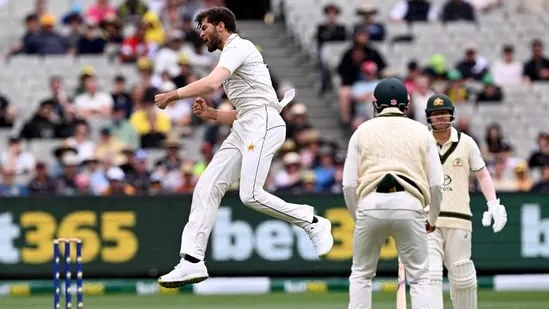
Australia tightened their grip on the Boxing Day Test at Melbourne by bowling Pakistan out for 214 on Day 3, enforcing the follow-on on the back of a massive first-innings lead. The hosts were ruthless with the ball, capitalizing on pressure built across sessions and leaving Pakistan facing an uphill battle to keep the match alive.
Pakistan resumed Day 3 hoping to reduce the deficit and regain some control after a difficult start to their first innings. Early intent was visible, with batters looking to occupy the crease and blunt the new ball. However, Australia’s bowlers remained disciplined, refusing to offer easy scoring opportunities and steadily increasing the squeeze.
The morning session set the tone. Australia attacked with tight lines and sustained pace, forcing Pakistan’s batters into defensive positions. Any lapse in concentration was punished immediately, as edges carried and mistimed shots found fielders stationed in catching positions. The wickets came at regular intervals, preventing Pakistan from building the long partnerships they desperately needed.
Pakistan’s middle order showed resistance, attempting to stabilize the innings through cautious shot selection and strike rotation. But the scoreboard pressure was relentless. With a huge deficit looming, Australia were able to maintain attacking fields, challenging batters to take risks. That pressure ultimately told, as attempts to break the shackles resulted in further dismissals.
The lower order fought briefly, adding valuable runs and frustrating Australia for short spells. However, once the second new ball became available, Australia struck decisively. The tail was cleaned up efficiently, and Pakistan were dismissed for 214, well short of what was required to avoid the follow-on.
Australia’s bowling performance was a collective effort. The pace attack exploited bounce and seam movement at the MCG, while changes of pace and angles kept Pakistan guessing. Rather than relying on one spell or one bowler, Australia applied pressure from both ends, ensuring there was no release for the batters.
The decision to enforce the follow-on was straightforward. With a commanding first-innings lead and time firmly on their side, Australia chose to keep Pakistan under continuous pressure. The move reflected confidence in their bowlers’ fitness and depth, as well as a clear intent to push for a result rather than settle for safety.
For Pakistan, the follow-on represents a stern test of character and endurance. Batting again under pressure, they now need significant resistance from their senior players to extend the match. Long partnerships and disciplined shot selection will be essential if they are to avoid an innings defeat.
Australia, meanwhile, will view this as an opportunity to strike early and end the contest decisively. Fresh bowlers, attacking fields, and a surface offering bounce all play into their strengths. Another cluster of early wickets could quickly put the match beyond Pakistan’s reach.
As Day 3 concluded, the match was firmly tilted in Australia’s favor. Bowling Pakistan out for 214 and enforcing the follow-on showcased their dominance across departments. Unless Pakistan can produce something exceptional in the second innings, Australia appear well on course for a comprehensive Boxing Day Test victory at Melbourne.
12BET Shortlisted for Sportsbook Operator of the Year at SBC Awards 2025