

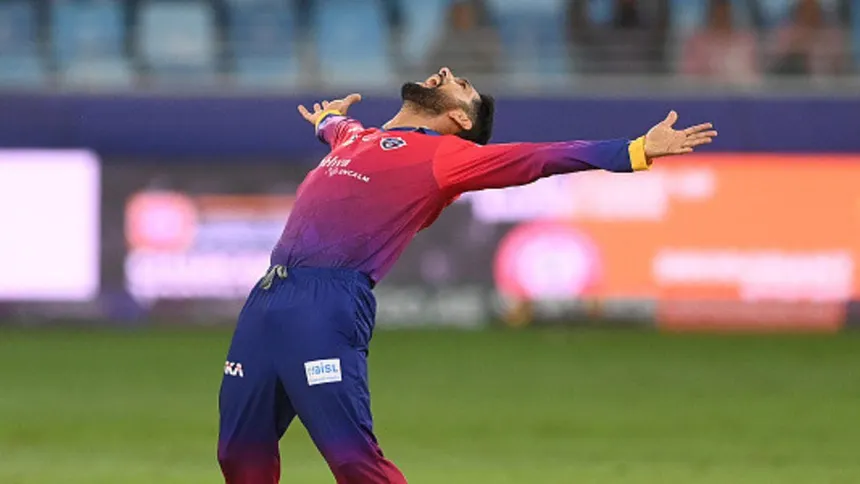
The 2025-26 International League T20 began with an opener that made a clear statement: champions can be outplayed when hunger meets structure. Desert Vipers beat Dubai Capitals by 4 wickets, closing the chase with the composure of a team built to manage phases, not melt in them. The triumph was sparked by a polished 50-plus from Andries Gous and powered equally by Vipers’ bowlers, whose collective spine ensured the Capitals never ran away with the game’s soul, even when the pitch didn’t promise much help early.
The opener unfolded at Dubai International Stadium, a venue that has grown into a format classroom of its own. Here, T20 isn’t merely a boundary carnival; it’s a chessboard where the surface evolves subtly over 20 overs, asking batters to sequence innings and bowlers to choreograph spells. The Capitals walked in as defending title-holders but were met by a side that played according to the modern T20 exam of 2025–26 — absorb first, attack only when the cost is clean, squeeze whenever the pressure dial tilts.
Gous doesn’t dazzle like a slot-machine hitter; he constructs like a timed demolitions expert. His half-century was built on clean strike rotation against the good balls, violent clarity on the loose ones, and late-in-over boundary punctuation that denied Capitals bowlers the luxury of uninterrupted sequences. This is the real gold medal in franchise openers now — creating time and space for finishers rather than surrendering both to bowlers.
But batting was only half the Vipers’ victory paragraph. It was the bowlers who kept the Capitals’ innings from turning into an execution stampede. Vipers’ attack was method-first from the first ball rather than menace-first. The new era of T20 bowling sustainability isn’t about steaming in with Wood-like injury velocity alone — though pace matters — it’s about pattern reliability, corridor discipline, and the ability to stretch 4-over spells without vomiting pressure. This was where the synergy of the Vipers’ bowling pack shone: not one headline weapon, but a collective web of consequences.
Fast bowlers bowled as though dots were currency, not consolation. Spinners delivered tumble-pressure by inducing ego mistakes instead of hunting irresponsibly for spun virality. Even though the scorecard summary signified a 4-wicket win with 6 balls intact, the innings design was starkly more important. When Vipers bowled, they bowled with corridor contracts that batters couldn’t ignore long enough without folding. When Capitals batters tried acceleration, it was usually in mid-over mind traps where the ball demanded respect. That produced an innings that eventually stumbled into a “good but not dominantly dangerous” range, a total that looked big early but was compressed into safety zones through dot scaffolding and overs sequencing.
It was a win built on bowling roles accepted, not bowling tempos guessed. “Held firm” isn’t dramatic language in T20 — it’s strategic success. This format rewards bowlers who don’t crumble mid-spell, don’t bowl emotionally into field illusions, and don’t give away risk windows through impatience. Vipers’ bowlers were persistent, pragmatic, and physically punctuation-proof — exactly the three virtues franchises now demand six times out of seven matchdays, not once in a season.
For Dubai Capitals, the loss, while not catastrophic, was diagnostic. Domestic franchise leagues have multiplied consequences. Budget bandwidth, skill bandwidth, physical bandwidth, and mental bandwidth — every bandwidth is audited this megacycle. Capitals showed respectable half-innings integration but were trumped by a league opponent that executed sequencing efficiently: choke pressure early, expand pressure middle, finish pressure late.
Looking ahead to 2026, when global T20 consequences scale sharply into World Cup battles, leagues like ILT20 have become audition theaters where demonstration of repeatable excellence > single-night exploits. India’s ODI centurions have been preaching the temperament gospel for 50-overs; ILT20 is amplifying the same logic for 120 balls compressed into 20-over windows: think early, calculate middle, attack late — and bowl every damn over like a plan, not a plea.
12BET Shortlisted for Sportsbook Operator of the Year at SBC Awards 2025