

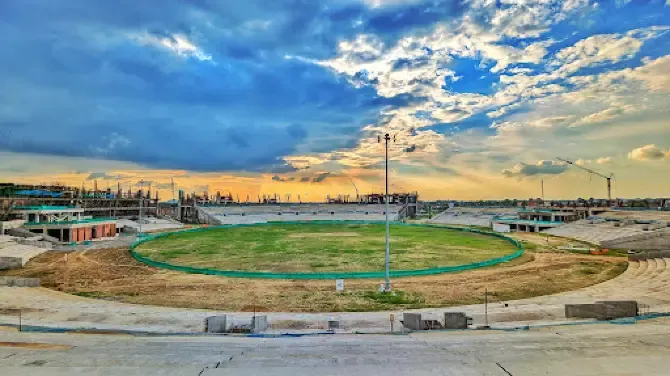
The Nitish Kumar government has cleared a historic hurdle for Bihar’s cricketing future, granting approval to hand over the newly built Rajgir International Cricket Stadium to the Bihar Cricket Association (BCA). This decision paves the way for the state to host both domestic and international matches—something cricket lovers in Bihar have been waiting on for decades.
The stadium is part of the ambitious Rajgir Sports Complex, spread across nearly 90 acres and designed as a multi-sport hub with world-class facilities. The cricket arena alone is built to seat around 45,000 spectators, and its pitches have been prepared with red soil from Maharashtra and local soil from Mokama to meet international standards. Modern training facilities, practice nets, and athlete accommodations are integrated into the complex, making it the most advanced cricketing infrastructure the state has ever seen.
For years, Bihar has been on the fringes of Indian cricket. Despite producing talented cricketers, the lack of facilities and administrative instability meant the state was often sidelined. Handing over the Rajgir venue to the BCA changes that equation. With this transfer, Bihar can now bid for Ranji Trophy matches, host BCCI domestic tournaments, and eventually attract India’s international fixtures.
The government’s move comes at a time of growing emphasis on sports development in Bihar. Recently, major funds were approved for a stadium project near Patna’s Punpun block, signaling a broader push to modernize infrastructure and position the state as a hub for athletics. Together with upgrades in Patna’s Moin-ul-Haq Stadium, Bihar could soon have multiple venues capable of handling high-profile cricket.
For the BCA, the challenge now is to manage and maintain Rajgir to international standards. Affiliation with the BCCI ensures technical support, but the association will be under scrutiny to deliver smooth operations, player development programs, and quality pitches. The prospect of hosting an India match in front of home fans would be both a logistical test and a symbolic milestone.
The move also carries significant social and economic weight. International cricket would boost tourism in Rajgir, already a destination known for its cultural heritage. Hotels, transport services, and local businesses stand to benefit from the influx of fans and media that accompany big-ticket matches. On a grassroots level, young cricketers from Bihar will finally have the chance to dream of playing on international-standard turf in their own state.
Politically, this step underscores the state government’s intent to expand opportunities for youth and invest in large-scale projects that build pride and visibility. For a state often criticized for lagging behind in sports infrastructure, the Rajgir stadium transfer sends a strong message of renewal.
With the BCA now officially in control, the countdown begins for Bihar’s entry into the mainstream cricket calendar. The dream of hearing the roar of an international crowd in Rajgir may not be far off. For Bihar’s cricket fans, the wait has been long—but the future finally looks ready to deliver.