

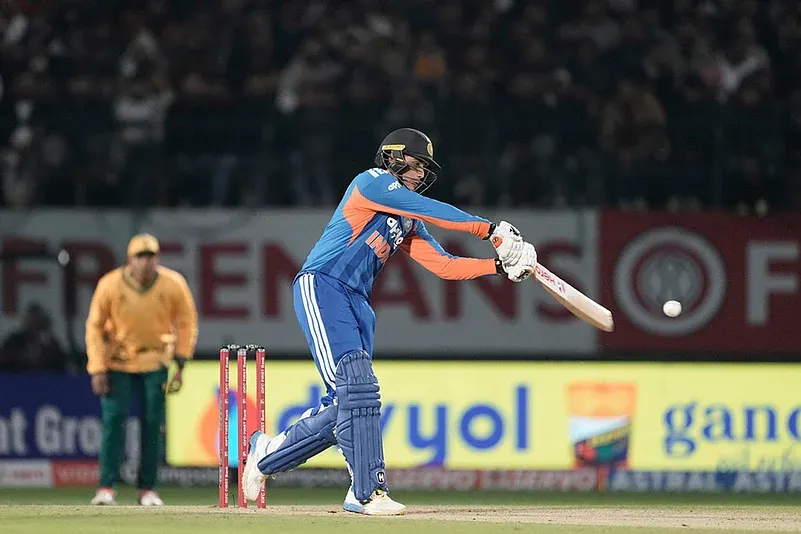
Shubman Gill once again underlined his growing stature in India’s white-ball setup with a measured yet authoritative innings in the fifth and final T20I against South Africa. His top score of 68 off 41 balls formed the backbone of India’s successful chase of 174, guiding the hosts to a six-wicket win and a commanding 4–1 series victory. While the scorecard reflected contributions across the batting order, Gill’s knock stood out for its timing, control, and clarity of intent.
Chasing a moderately challenging target, India needed stability at the top after a series that had swung on momentum shifts. Gill delivered exactly that. From the outset, he read conditions astutely, refusing to be rushed despite the presence of attacking field settings and varied bowling plans from South Africa. Rather than forcing big shots early, he focused on placement, strike rotation, and picking the right moments to accelerate — a hallmark of maturity that has come to define his T20 evolution.
Gill’s innings was built on balance. He mixed elegant strokeplay through the off side with controlled power down the ground, ensuring the run rate stayed healthy without exposing the middle order to undue pressure. Against pace, he showed soft hands and crisp timing; against spin, he was decisive, stepping out when needed and using the crease intelligently to disrupt lengths. This adaptability allowed India to remain ahead of the required rate almost throughout the chase.
What made Gill’s knock particularly valuable was its impact on the broader innings. With a reliable anchor at one end, India’s other batters were free to play their natural games. Short partnerships were effective, and even when wickets fell, the chase never drifted into uncertainty. Gill’s presence brought calm — something that cannot be overstated in T20 chases, where panic often creeps in after a couple of quick dismissals.
South Africa attempted to apply pressure through bowling changes and subtle field adjustments, but Gill consistently found answers. He avoided risky cross-batted shots, trusted his strengths, and waited for bowlers to err. When the opportunity came to accelerate, he did so cleanly, pushing India firmly toward the finish line before his eventual dismissal. By then, the outcome was largely decided.
This innings also reflected Gill’s broader growth as a T20 batter. Once viewed primarily as a classical player better suited to longer formats, he has steadily expanded his range in the shortest version of the game. Without abandoning technique, he has added intent, better strike-rate management, and sharper shot selection — attributes that make him increasingly indispensable at the top of India’s order.
From a team perspective, Gill’s 68 symbolised India’s dominance throughout the series. The ability to chase targets with composure, rather than desperation, was a recurring theme. India did not rely on one explosive cameo to rescue them; instead, they trusted structure and skill. Gill’s innings exemplified that approach, blending responsibility with aggression in just the right proportions.
As India closed out the series 4–1, Gill’s performance in the final match served as a reminder of the depth and versatility within the squad. For the opposition, it was another example of how difficult India are to contain when their top order bats with such assurance. For India, it was confirmation that Shubman Gill is no longer just a promising talent — he is a dependable match-winner in pressure situations.
12BET Shortlisted for Sportsbook Operator of the Year at SBC Awards 2025