

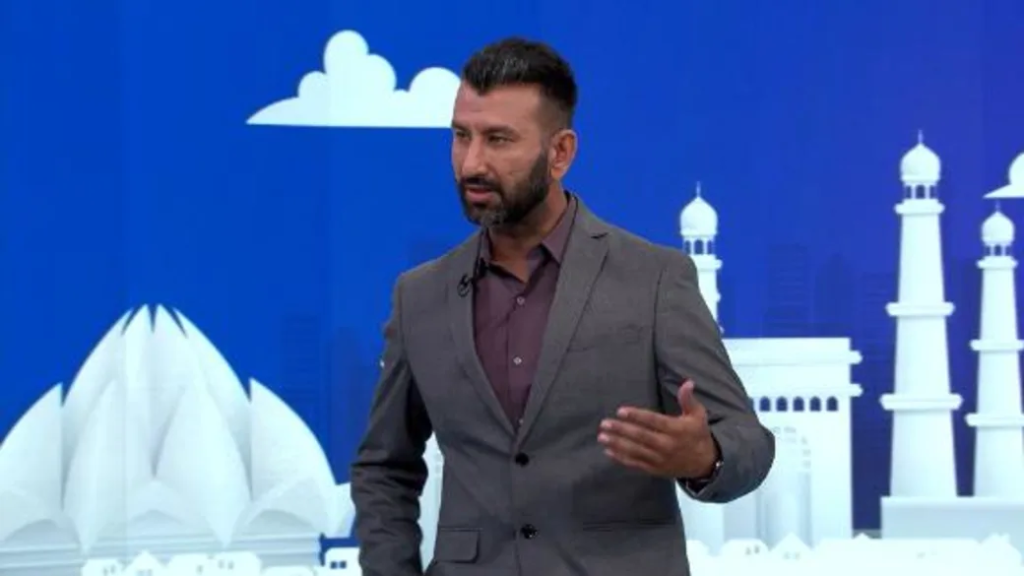
How does India fill the Gill-sized void in their batting will be a key question for the think-tank ahead of Guwahati.
Left-hand or left-field – who fills in for Gill in Guwahati Test and how?
Although Shubman Gill is not yet officially ruled out of the Guwahati second Test match against South Africa, all indications point to his unlikely participation.
India currently has three candidates to replace Gill in their starting lineup: two specialist hitters, B Sai Sudharsan and Devdutt Padikkal, and a seam-bowling all-rounder, Nitish Kumar Reddy, who returned to the squad following his discharge from the first Test in Kolkata.
If Gill is unable to play, who steps in? Sai Sudharsan, who lost his spot in Kolkata when India opted to play an additional spin-bowling all-rounder in Axar Patel, is the logical choice. Sai Sudharsan’s No. 3 spot was filled by Washington Sundar, who scored 29 and 31 while facing more balls (174) in the two innings than any player on either side of the Test match.
With one exception—he bats left-handed—Sai Sudharsan, the man at the top of India’s specialist-batter lineup, is the clear pick to replace Gill in Guwahati. Padikkal does the same.
With four wickets in each innings, offspinner Simon Harmer was South Africa’s main bowler in Kolkata and was named Player of the Match. India’s difficulties against him was exacerbated by the fact that their lineup had six left-hand hitters, who accounted for six of his eight wickets.
Gill did not play any further of the game after facing just three balls in the first innings before quitting due to neck spasms. In both innings, India essentially had just ten players, and they also lacked a right-hand batter, their skipper, and their greatest middle-order batsman.
Gill should ideally be replaced by a specialist right-hand hitter, but India does not currently have one in its roster.
Reddy is the right-handed option, but as a hitter and bowler, he is still a long way off. He was played by India in both Tests of their previous Test series, which was against the West Indies, and they successfully used both matches to provide him with experience. Throughout the two Tests, he batted just once and bowled just four overs. He came in at number eight in their preferred batting order, behind Washington and spin-bowling all-rounders Ravindra Jadeja.
How the void can be filled?
There are two ways for India to work around their lack of a specialist right-hand option to take Gill’s place.
The simplest is to add an external member to their team. Other than Jurel, Ayush Mhatre, an opener who made fifty in both matches, Rajat Patidar, and Ayush Badoni were the three right-hand top-order hitters that represented India A in the two unofficial Test matches against South Africa A. Another choice is Ruturaj Gaikwad, who scored 117 and 68* in the first two games of that series’ 50-over leg.
Sarfaraz Khan, who hasn’t played Test cricket since last year’s home series against New Zealand but was a member of India’s team for the subsequent tour of Australia, is another option that is clear in one way but left-field in another.
And then there’s Karun Nair, who returned to India’s Test team during their most recent tour of England after an eight-year hiatus. However, he was dismissed following a series in which he frequently got off to starts but only reached fifty in four Tests. However, he has had an incredible start to the Ranji Trophy season, scoring 73, 174*, 233, and 95 in his first seven innings. He is also well known for his skill against spin, especially when it comes to using the sweep and reverse-sweep.
Option Number 2
India probably has two choices if they need to replace Gill from within their team. One is to select Sai Sudharsan (or Padikkal, if the team management believes he has jumped the queue) and acknowledge that they will have seven left-handers in their starting lineup and six in their top eight going into the Test.
The alternative would be to select Reddy and Sai Sudharsan while sacrificing one of their spin-bowling all-rounders. It’s doubtful that India will bench Washington given his performance with the bat in Kolkata and the fact that he has regularly started ahead of Axar since his return against New Zealand last year.
Axar will then have to make room after being particularly chosen as a second left-arm spinner in Kolkata to counter a South Africa lineup that is dominated by right-handers.
This would also make sense given that Axar found it difficult to challenge both edges of the bat on an Eden Gardens pitch that turned sharply. With his wide angle of release and undercutting delivery style, Axar made an immediate impression in his first Test series against England in 2021. One right-hand batter after another was bowled or leg before wicket while playing for no turn.
In that series, he claimed 27 wickets at an almost unbelievable average of 10.59, but since then, teams have figured out how to play him consistently, using his angle without anticipating a massive turn. Since that series, Axar has taken 30 wickets at an average of 27.83 and a strike rate of 63.1 in 12 Test matches, all played in Asian conditions. Balls from Axar that twisted enough to endanger the right-handers’ outside edge were rare, even in Kolkata.
Naturally, leaving out Axar would also mean leaving out a reliable, seasoned batting hand that batted with the tail and made two significant contributions in Kolkata. However, there are benefits to selecting Reddy as a non-bowling No. 8.
His right-handedness is evident, but his handling of Nathan Lyon during his first series in Australia in 2024–2025 may be more significant. He consistently applied pressure to the offspinner by stepping out to him, driving him into the turn, or bringing out the reverse-sweep. Despite dismissing Reddy twice during the series, Lyon gave him 86 runs off of 127 balls. Despite the fact that Harmer and Lyon are different offspinners, these figures will support India should they choose Reddy.