

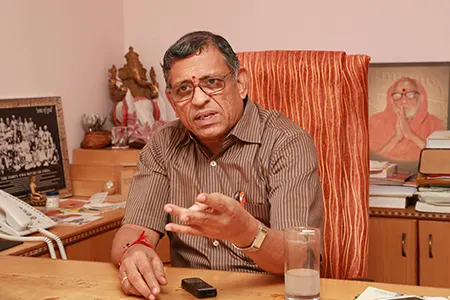
In a landmark development for Associate cricket, Gurumurthy Palani from France has been elected to the International Cricket Council’s (ICC) Chief Executives Committee (CEC), a key decision-making body shaping the global cricket landscape. His election marks a notable step forward for representation of non–Full Member countries within cricket’s top administrative tier.
Palani’s victory in the ICC elections was the result of strong support from several Associate boards who sought a reform-oriented figure capable of amplifying their collective interests. Known for his administrative experience in European and Middle Eastern cricket, Palani has been involved with both the France Cricket Federation and the Bahrain Cricket Federation, giving him a deep understanding of the development challenges facing emerging nations.
In his pre-election manifesto, Palani was explicit about his agenda: ensuring Associate members are not just passive recipients of ICC decisions but active participants in shaping them. His platform emphasized improving funding transparency, strengthening cricket pathways for emerging countries, and ensuring that the next ICC cycle prioritizes competition structures that give Associates consistent, meaningful fixtures.
He has also spoken about bridging the resource gap between Full Members and Associates, pushing for fairer financial distribution models and greater investment in infrastructure, coaching, and grassroots programs. Palani believes that cricket’s future growth depends on expanding beyond traditional strongholds and enabling nations in Europe, Africa, and the Americas to develop sustainable ecosystems for the game.
This election comes at a pivotal time. The ICC has been working to broaden its global footprint, especially as new leagues and regional tournaments begin to flourish in non-traditional markets. The inclusion of voices like Palani’s in the CEC signals recognition that cricket’s long-term growth hinges on supporting the 90+ Associate nations that make up the majority of the ICC’s membership.
Palani’s stance also underscores a more inclusive vision of governance. He has called for better communication between ICC leadership and smaller boards, ensuring that Associate representatives are consulted before major financial or calendar-related decisions are finalized. This approach aligns with recent calls for decentralization within international cricket governance — where local expertise and regional autonomy can drive faster, context-driven development.
Beyond governance, Palani’s appointment holds symbolic weight. As a representative from France, a nation where cricket remains a minority sport, his election sends a clear message: the ICC’s administrative structures are gradually opening up to a more diverse leadership base. His success may inspire other emerging cricket nations to push for greater involvement in ICC affairs, shifting the narrative from dependency to participation.
However, his real test begins now. With global cricket entering an era defined by franchise expansion, commercial pressures, and shifting priorities, ensuring that Associate nations aren’t sidelined will be an uphill battle. Translating his vision into policy, particularly around funding equity and international exposure, will demand both persistence and diplomacy.
Still, for the many smaller cricketing nations that often feel unheard, Palani’s election represents hope — that a more inclusive and balanced era of cricket governance may finally be within reach.
12BET Shortlisted for Sportsbook Operator of the Year at SBC Awards 2025