

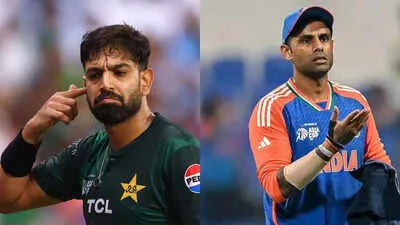
The International Cricket Council (ICC) has concluded its investigations into on-field conduct during the 2025 Asia Cup, issuing sanctions against several players for breaches of the Code of Conduct in high-tension India-Pakistan matches. The disciplinary panel reviewed incidents from matches held on September 14, 21 and 28, and has now confirmed suspensions, fines and warnings.
The most significant outcome involved Pakistan fast bowler Haris Rauf, who has been suspended for two limited-overs matches. Rauf accumulated four demerit points, having been found guilty twice of breaching Article 2.21 of the Code (conduct that brings the game into disrepute). He was fined 30% of his match fee on each occasion and will miss Pakistan’s upcoming ODIs against South Africa.
On the Indian side, captain Suryakumar Yadav was fined 30% of his match fee and received two demerit points for a gesture and on-field remark viewed as provocative. Another Indian player, Jasprit Bumrah, accepted a charge under the same article and was issued an official warning along with one demerit point. Pakistan batter Sahibzada Farhan received an official warning and one demerit point for his conduct during the contest.
The formal sanctions come after match referees from the ICC’s Elite Panel conducted hearings during and after the tournament. The findings underline the ICC’s willingness to act swiftly even in emotionally charged bilateral fixtures, where traditional rivalries can drive behaviour beyond acceptable limits. The Code’s threshold for Level 1 breaches includes penalties from reprimands to up to 50% match-fee fines and one or two demerit points; reaching four demerit points within a 24-month span converts into suspension points. In Rauf’s case, crossing that threshold triggered his two-match ban.
This action has broader significance in multiple ways. Firstly, it sends a clear message that even high-profile matches involving India and Pakistan will not be immune to scrutiny and sanction. Secondly, it reinforces the expectation that elite players represent both their nation and the global sport responsibly. Thirdly, the timing—immediately after a major tournament—ensures the impact is felt ahead of upcoming international commitments, emphasising accountability.
For Pakistan, Rauf’s suspension poses immediate tactical implications: his absence in the bowling line-up for the forthcoming ODIs will force alterations and may impact team balance. For India, while the fines and warnings carry less immediate disruption, the incident highlights how player conduct can shift focus away from performance and onto behaviour. In both cases, boards will need to manage reputational risk and ensure players are briefed on conduct expectations.
Beyond the individual sanctions, the episode exposes lingering issues in high-tension matches where political, historical and fan-driven undercurrents can seep into player behaviour. Rivalries such as India-Pakistan are watched by millions, and the potential for fireworks—on and off the field—is magnified. The ICC’s intervention now may set a precedent for future regulation of player conduct in high-stakes tournaments.
Looking ahead, both national boards will need to ensure that the sanctions lead to genuine behavioural change. That means clear player education programmes, internal disciplinary protocols, and a culture of respect that matches the intensity of competition. The ICC has demonstrated that its regulatory arm is active; national boards must ensure their teams respond accordingly.
12BET Shortlisted for Sportsbook Operator of the Year at SBC Awards 2025