

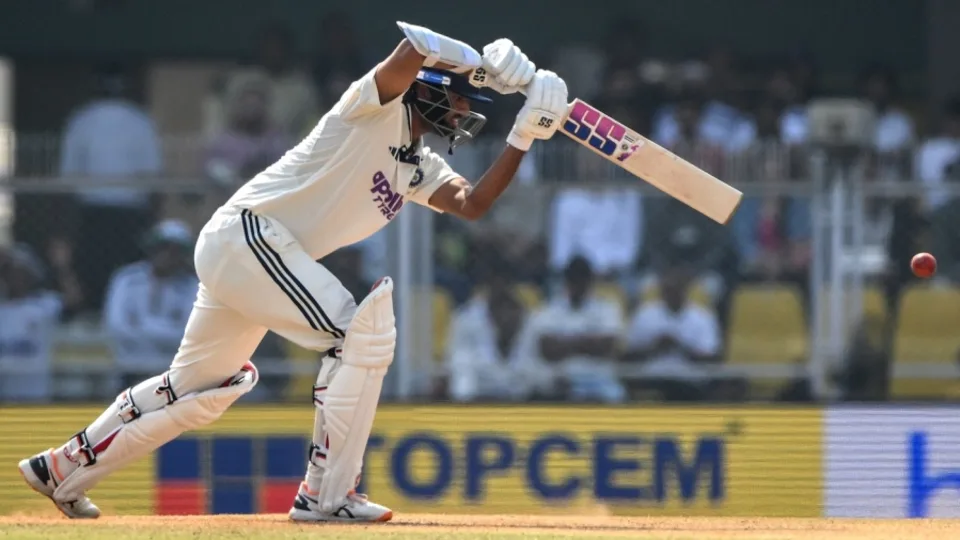
India and their 68 balls of a home nightmare of biblical proportions with very little going right for them on the field.
India suffer 68 balls from hell in a hellish year at home.
A slog, a charge down the track. A scorched review, an advantage to the keeper. A batter facing his eighth ball is responsible for all of this. In a two-Test series, India is currently down 1-0. in response to South Africa’s 489 at 105 for 4. They have just lost three wickets for ten runs.
Rishabh Pant, the acting captain, said all of this.
Everything that has gone wrong for India in home Test matches over the past year or so seems to be summed up in this moment. This shot was made against an assault with just three true strike bowlers on a wicket that was still fairly excellent to bat on.
For what reason would someone play this shot?
But this was no one. This was Rishabh Pant, a habitual risk-taker. When those chances pay off, it’s a serial gamechanger. When they don’t, they are consistently foolish.
Was it required? No. Even though this pitch was performing better on day three than it had on days one and two, run-scoring was still feasible using standard techniques. India had just suffered a series of wicket losses. Marco Jansen appeared dangerous as he pounded the ground and produced awkward lift, but Pant would have had more opportunity to pursue bowlers if he had been able to end this stint.
What makes him act in this way? You can only find out from him. But even when he plays lengthy innings, he manages to do it. On those days, he just happens to get away with it, and maybe this helps him divert bowlers from their intentions.
Because Pant’s dismissal in Guwahati fell so awkwardly between a mistake in judgement and an impulsive decision that might have resulted in a different outcome on an other day, it brilliantly captured India’s problems.
India moved from 95 for 1 to 122 for 7 over 68 balls from hell as a result of all of this.
Unlike the ball from Jansen that Jurel attempted to pull from well outside off stump, these balls from hell weren’t actually horrible. In this day and age, hitters frequently pull off the spectacular and transfer talents from one format to another, making it challenging to determine whether a shot is sound. And in the start of the day, India needed to score a lot in addition to batting for a long time.
Over those 68 balls from hell, nothing went well for India. After that, Washington Sundar and Kuldeep Yadav put up 72 in 208 balls for the eighth wicket, making things appear worse. After Harmer ended that partnership, Jansen concluded with 6 for 48, one of the best performances by a visiting fast bowler in India, taking the final two wickets with the second new ball.
India was destined for this situation on this day. A year from hell in home Tests was summed up by sixty-eight balls from hell, which put a magnifying glass on every choice they made during that time.
It’s crucial to keep in mind that magnifying glasses can cause distortion during certain situations. For example, it was simple to look at India’s lineup during this collapse and conclude that they had chosen too many all-rounders and too few specialist hitters, and that they were all batting in the incorrect positions.
With the exception of Reddy, whose inclusion in the squad at home will undoubtedly be examined following this series, this XI was nearly the best that India could have chosen.
With the exception of Reddy, all of India’s batting-order choices and selections had validity. Washington demonstrated his ability to bat at number three in Kolkata, although he did so because Sai Sudharsan, India’s usual number three, was left out. It would have been equally acceptable for Washington or Sai Sudharsan to bat at No. 3 with him back; India’s decision wasn’t made poorly just because they had a rough day.
Jurel, on the other hand, has gone on an amazing run of red-ball form for India and India A, forcing himself into the starting lineup as a batter.
Long-serving senior players have left India, and they’ve been fortunate that their successors have generally performed well in Test cricket, but there have been times when the lack of experience has been evident. On this flat Guwahati pitch, the difference between Washington and R Ashwin as offspinners became apparent: despite his accuracy and capacity to produce drift and bounce, the younger player still needs to improve his ability to change his velocity and trajectory for a particular surface.
These feelings are normal, but they become more intense when a team is on the verge of losing its second home Test series in a year. However, take in mind that the magnifying glass has a distorting impact, whether you’re training it on Monday’s 68 balls from hell or India’s year from hell.