

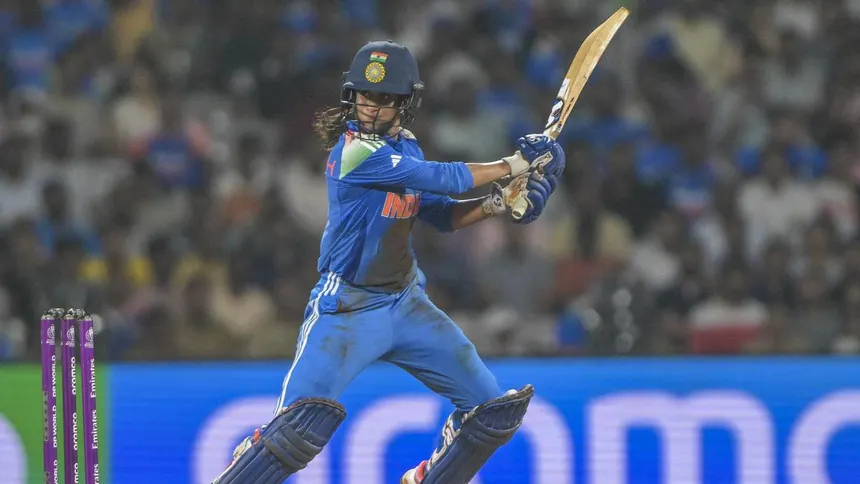
India Women posted a competitive total of 150/7 in their recent T20I, with Jemimah Rodrigues leading the way by top-scoring with 41. In a match defined by disciplined bowling from both sides and tactical field placements, India’s innings showcased resilience and adaptability, laying a platform for a challenging run chase or defendable total.
India’s batting effort began in cautious fashion under conditions that offered assistance to the bowlers. The openers focused on survival first, prioritizing strike rotation and careful shot selection rather than explosive boundaries. Early overs saw probing lines and clever changes of pace from the opposing attack, which prevented India from immediately dominating. In such scenarios, building partnerships and staying ahead of the required run rate became the early challenge.
Jemimah Rodrigues emerged as the standout performer in the middle overs. Coming in at a time when India needed stability, she batted with maturity and awareness. Her 41 was marked by crisp timing and measured aggression, particularly through the off side where she found gaps with regularity. Instead of searching for outrageous hits, Rodrigues chose smart placement, combining singles and boundaries to keep the scoreboard ticking. This approach ensured India maintained momentum even when wickets fell at the other end.
Rodrigues’ innings was also notable for how she handled pressure. Against tight lines, she used her feet well, especially against spin bowlers who tried to stifle scoring by bowling at the top of off stump. Her use of the crease and quick decision-making helped unsettle the fielding side’s plans, and she punished anything overpitched with clean strokeplay.
Despite Rodrigues’ best efforts, India faced challenges in building sustained partnerships. A couple of early dismissals put the middle order on the back foot, and while there were brief spells of useful accumulation, regular breakthroughs by the bowling side prevented any single batter from turning the innings into a big score. These periodic setbacks highlighted how evenly matched the bowling units were in this contest.
The middle overs involved smart tactical adjustments from India. With boundaries harder to come by under disciplined lines and tight fielding, batters rotated strike effectively, preventing pressure from building in long spells. That patience allowed India to set up a platform for acceleration in the final overs. While they didn’t quite unleash a full late assault, the closing overs saw India pick up important runs that lifted them past the 150 mark — a competitive total on a tricky pitch.
Defending 150, India could expect their bowlers and fielders to take the game into the opposition’s nerves. In T20 cricket, totals in the 140–160 range often hinge on bowling combinations, fielding execution, and death-over control. India’s ability to defend 150 will depend on variation, control, and the capacity to take early wickets — an advantage they do possess with a balanced bowling attack and fielders capable of saving crucial runs.
Jemimah’s contribution was clearly the standout batting performance for India, but the team will be looking for more sustained efforts from the middle and lower order as the series progresses. In a tightly fought encounter, 150/7 sets up a competitive match where the bowlers and captains’ tactics could very easily decide the outcome.
12BET Shortlisted for Sportsbook Operator of the Year at SBC Awards 2025