

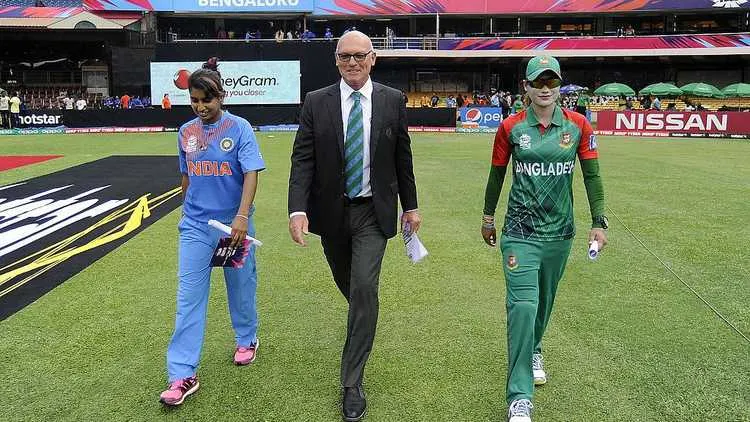
India’s upcoming women’s cricket tour of Bangladesh — originally scheduled for August 2025 and consisting of three ODIs and three T20Is — has been pushed back by a full year, with the new window set for September 2026. Both boards publicly described the move as a scheduling adjustment, but the wider context makes it clear this wasn’t just a calendar shuffle.
Behind the scenes, diplomatic tension between the two countries has been intensifying. Recent political friction, trade disagreements, and a noticeable cooling of bilateral communication have created an environment in which major cross-border sporting commitments are harder to execute smoothly. Sources in the Indian cricket administration indicated that government advisories played a role, with officials recommending caution due to the unstable diplomatic climate. Cricket boards are rarely independent of geopolitical realities, and this is a textbook example of sport reflecting the broader state of international relations.
The BCCI and BCB released a joint statement declaring the postponement “mutual”, stressing that the series remains part of the Future Tours Programme and will be staged in full at a later date. Both boards have tried to keep the tone optimistic, avoiding any implication that ties are deteriorating. Still, the delay is significant: India’s women have toured Bangladesh consistently over the past decade, and this marks one of the rare interruptions to that pattern.
Bangladesh’s administrators have publicly expressed hope for a smooth rescheduling process, maintaining that discussions with India remain active. The BCB is keen to ensure the series eventually takes place, not only for competitive reasons but also because India tours typically bring financial and viewership boosts for Bangladesh cricket.
For the players, the postponement disrupts a valuable competitive block. India’s women’s team had been using the 2025 fixtures as part of their build-up to a heavier global calendar in 2026. Bangladesh’s squad, meanwhile, loses a marquee home assignment that would have offered exposure against a top-tier opponent. Both teams will now have to recalibrate their preparation cycles, shifting focus to domestic structures and alternate international windows.
None of this means the series is in danger of cancellation. Cricket relations between India and Bangladesh have weathered political fluctuations before, and both boards remain committed to fulfilling their FTP obligations. But the episode underscores how vulnerable international sporting schedules can be when diplomatic headwinds rise.
Until political footing stabilises, major bilateral engagements involving tight travel timelines and heavy logistical cooperation may continue to face scrutiny. For now, the India–Bangladesh women’s series sits in a holding pattern — delayed, not derailed.
12BET Shortlisted for Sportsbook Operator of the Year at SBC Awards 2025