

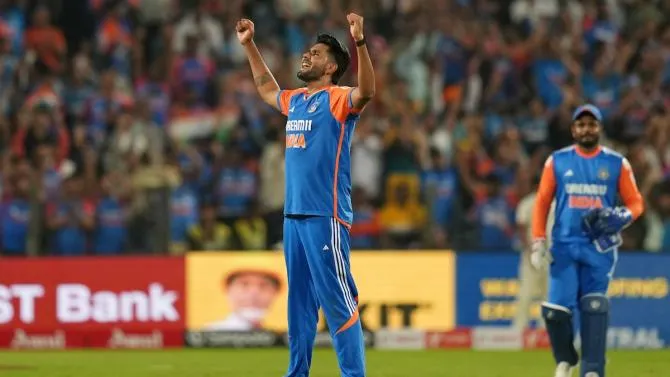
India made a strategic decision to rest Jasprit Bumrah for their final Group A match against Oman in the 2025 Asia Cup, prioritizing workload management ahead of the high-stakes Super Four stage. The rotation allowed the team to test their bench strength, giving opportunities to Harshit Rana and Arshdeep Singh, both of whom played key roles in the match.
The move highlighted India’s focus on maintaining fitness and freshness among core players. Bumrah, who has been leading India’s pace attack, was given a break to recover physically and mentally, ensuring he remains at peak performance for critical matches against stronger opponents like Pakistan and Sri Lanka. Similarly, resting other frontline players allowed management to evaluate reserves in real match situations, keeping the team adaptable and battle-ready.
Harshit Rana, returning after an injury hiatus, was given the chance to showcase his pace and variations. Meanwhile, Arshdeep Singh came in with the added incentive of reaching a career milestone, being close to 100 T20I wickets. Both players received valuable game time, helping them regain rhythm and gain confidence in competitive conditions. Their contributions were significant in containing Oman’s chase, even as the match tested their match-readiness after limited appearances in the tournament.
India’s batting remained strong, anchored by players like Sanju Samson and Suryakumar Yadav, who steadied the innings and ensured a defendable total. The bowling unit, bolstered by the inclusion of Rana and Singh, demonstrated depth and adaptability, executing strategies effectively despite the absence of senior pacers. This blend of experience and fresh talent is part of India’s broader plan to maintain balance across the squad.
Strategically, resting key players at this stage underscores India’s proactive approach to tournament management. By rotating the squad, India preserves the fitness of frontline players, evaluates bench options, and ensures the team remains mentally sharp for crucial matches ahead. The experience gained by Rana and Singh is expected to strengthen the squad, providing multiple options for team combinations in the Super Four stage.
As India progresses, this rotation policy could prove decisive. Maintaining peak fitness among star players while giving emerging talents exposure ensures India has both quality and depth in its squad. Bumrah’s rest and the inclusion of bench players reflect a forward-thinking approach, balancing short-term results with long-term tournament objectives.
In summary, India’s decision to rest Jasprit Bumrah and blood players like Harshit Rana and Arshdeep Singh highlights the team’s focus on fitness, adaptability, and depth. The strategy not only secures their immediate success against Oman but also strengthens their readiness for the intense Super Four stage of the Asia Cup.
12BET Shortlisted for Sportsbook Operator of the Year at SBC Awards 2025