

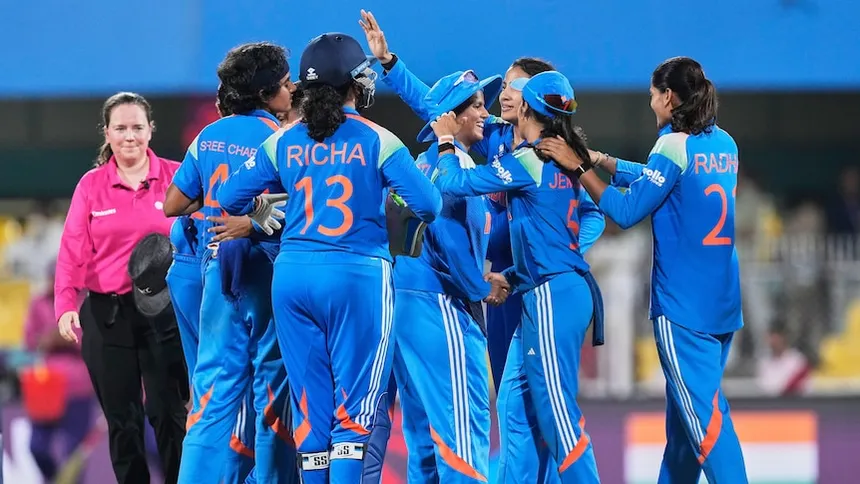
India Women wrapped up a dominating T20I series against Sri Lanka Women with a comprehensive 49-run victory in the third and final match, completing a 3–0 whitewash on the tour. The result capped a series in which India controlled proceedings from start to finish — posting competitive totals and applying consistent bowling pressure — and underlined their status as one of the most well-balanced sides in women’s T20 cricket.
Batting first in the series decider, India Women set about building another formidable score. The top order laid a solid foundation, combining technique with calculated aggression to navigate the early overs. What stood out was the balance between intent and control: rather than going into wild power mode, India rotated strike smartly, punished loose balls, and accelerated at the right stages to keep the momentum firmly in their favour.
Several Indian batters contributed meaningfully in the innings, ensuring that Sri Lanka’s bowling attack had no obvious weak link to target. By the time India reached 167/5, they had established a total that was both competitive and psychologically taxing for their opponents. In a T20 context, scores in the high 160s are difficult to chase without early partnerships and sustained momentum — something Sri Lanka would struggle to find on a day where India’s bowlers were disciplined and incisive.
Sri Lanka’s chase began with determination, but it never really gathered the necessary rhythm. India’s bowlers, led by a mix of pace and spin, maintained tight lines and lengths from the very first ball. Rather than simply hitting hard, they bowled with purpose, building pressure through dot balls and thoughtful variations. This approach paid dividends, especially in the middle overs, where Sri Lanka needed consolidation but instead lost crucial wickets at regular intervals.
Fielding support was another area where India stood out. High-pressure matches like this often hinge on fine moments — sharp stops in the deep, direct hits from the boundary, or confident catches in the circle. India executed in all those areas, not allowing Sri Lankan batters to scrape boundaries or cling to marginal chances. The cumulative pressure translated into errors from the Sri Lanka lineup, further lifting Indian confidence as the series finale unfolded.
Despite the eventual margin, Sri Lanka showed moments of resilience. A couple of middle-order batters managed to post fighting scores and offered a glimpse of their potential in international cricket. However, without substantial partnerships, they were always chasing from behind, and wickets at key moments ultimately derailed their chase long before the innings reached the closing stages.
From a series perspective, India’s clean sweep reflects depth, consistency, and tactical clarity. They applied pressure with both bat and ball, adapted to conditions quickly, and executed game plans without overreliance on individual heroics. That cohesion and balance often make the difference in bilateral series, especially when conditions and situations vary from match to match.
For Sri Lanka Women, the tour offered valuable experience against a top-tier side. While the results didn’t go their way, matches like these provide important learning opportunities — particularly in handling pressure chases and building longer partnerships under duress. With continued development and exposure, they will aim to close the competitive gap further in future assignments.
12BET Shortlisted for Sportsbook Operator of the Year at SBC Awards 2025