

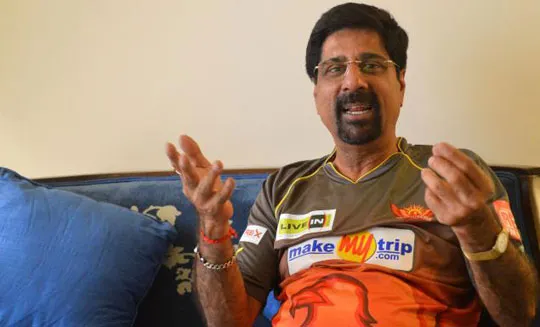
Former India opener and ex-chief selector Krishnamachari Srikkanth has sparked controversy with his candid remarks about India’s recently announced Asia Cup squad. Known for his straightforward style, Srikkanth didn’t sugarcoat his opinion and directly questioned the team’s readiness for bigger challenges ahead. His statement, “We might win the Asia Cup with this team, but there is no chance of winning the T20 World Cup with this bunch,” has quickly become the talking point among fans and analysts.
Srikkanth’s concern lies not just in the squad’s composition for the Asia Cup but in the broader implications it has for the T20 World Cup, which is only a few months away. According to him, the selectors appear more focused on patchwork combinations rather than building a well-rounded unit capable of winning on the global stage. He raised critical questions about whether this squad, in its current form, is truly preparing India for the intensity of a world tournament.
One of his strongest criticisms was directed at the decision to remove Axar Patel from the vice-captaincy role. For Srikkanth, this demotion seemed both unnecessary and counterproductive, especially given Patel’s consistent performances in recent times. He also took issue with the inclusion of names like Rinku Singh, Shivam Dube, and Harshit Rana, hinting that their selection was more about IPL flashes than sustained international credibility. While he acknowledged their talent, Srikkanth was unconvinced that they were the right picks for such high-stakes tournaments.
The debate around India’s middle order particularly bothered him. He asked bluntly, “Who will bat at No. 5?” pointing out that while players like Sanju Samson, Jitesh Sharma, or Rinku Singh could slot in, the current selection lacked clarity and structure. The addition of Shivam Dube, while sidelining other promising options such as Yashasvi Jaiswal, left him questioning the selectors’ long-term vision. In his eyes, the middle-order muddle could end up being a decisive weakness when India faces stronger opponents on bigger stages.
This critique is especially significant because India are the reigning T20 World Cup champions. With legends like Virat Kohli, Rohit Sharma, and Ravindra Jadeja having stepped away from T20 internationals, there is immense pressure on the next generation to prove themselves. For Srikkanth, the Asia Cup should have been the perfect testing ground for a squad that closely resembles the one that will defend the world title. Instead, he sees a team capable of short-term regional success but not the long-term dominance that Indian cricket expects.
His blunt assessment has divided opinions. Supporters argue that his honesty reflects the concerns of many fans, who worry about inconsistency in selection. Critics, however, believe his comments are too harsh and dismissive of young players who deserve opportunities to prove themselves. Regardless, his remarks have reignited the debate on whether India is prioritizing the right players and strategies as they gear up for the T20 World Cup.
At its core, Srikkanth’s criticism is not about tearing the team down but about pushing for accountability. The Asia Cup might still bring silverware, but as he pointed out, global tournaments demand more than just talent—they demand clarity, preparation, and balance. For India, the clock is ticking, and the selectors’ decisions now could determine whether the country celebrates back-to-back T20 World Cup titles or faces yet another painful reality check.