

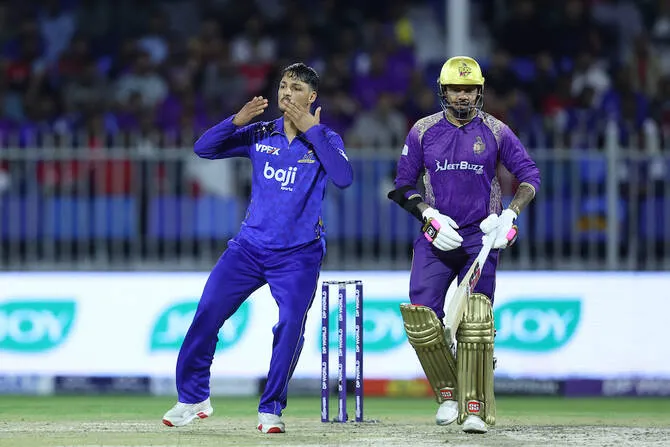
MI Emirates delivered a commanding performance in the International League T20, defeating Abu Dhabi Knight Riders by eight wickets after chasing down a modest target of 146 in just 15.1 overs. The emphatic nature of the victory underlined Emirates’ growing momentum in the tournament and exposed the Knight Riders’ struggles with both bat and ball on a night where execution proved decisive.
After being asked to bat, Abu Dhabi Knight Riders never fully settled. While they managed to bat out most of their overs, the innings lacked sustained fluency and failed to generate the kind of acceleration required in modern T20 cricket. MI Emirates’ bowlers stuck to disciplined lengths, cut off boundary options, and forced the Knight Riders into low-percentage shots during the middle overs.
The Knight Riders’ innings was defined by brief sparks rather than meaningful partnerships. Batters got starts but were unable to convert them into defining contributions, leaving the total hovering below par. Regular wickets prevented any late surge, and the absence of a dominant stand meant the pressure remained firmly on the batting side throughout.
In contrast, MI Emirates approached the chase with clarity and intent from the first over. Their openers set the tone early, attacking loose deliveries while showing restraint against the better balls. The powerplay was used effectively, ensuring the required run rate dropped quickly and the Knight Riders were denied any early foothold in the contest.
What stood out most in Emirates’ chase was the calmness. There was no sense of urgency or panic, despite the target requiring proactive batting. The top order rotated strike smoothly, punished errors, and ensured boundaries came often enough to keep the fielding side on the defensive. The chase felt controlled rather than aggressive, reflecting confidence in their batting depth.
As the innings progressed, MI Emirates became even more assertive. With wickets in hand, they targeted specific bowlers, particularly in match-ups that favored their strengths. The middle overs — often a phase where chases can stall — instead became a period of consolidation and quiet domination, as singles, twos, and timely boundaries steadily closed out the contest.
Abu Dhabi Knight Riders’ bowlers struggled to apply sustained pressure. While there were a few tidy overs, the lack of early breakthroughs hurt them badly. Without wickets, defensive fields came into play quickly, further easing the task for Emirates’ batters. Fielding lapses added to the Knight Riders’ problems, allowing Emirates to capitalize fully.
The match was effectively decided well before the final overs. By the time MI Emirates entered the closing phase, the equation was trivial, and the batters finished the chase without unnecessary risks. Reaching the target with nearly five overs to spare highlighted the gulf in execution between the two sides on the night.
This win strengthens MI Emirates’ position in the ILT20 standings and reinforces their credentials as a well-balanced unit. Their bowling was disciplined, their batting assured, and their game management sharp — all indicators of a team peaking at the right time.
For Abu Dhabi Knight Riders, the defeat raises familiar questions. The inability to post competitive totals and apply pressure with the ball continues to hurt them. Unless they find consistency and sharper intent in key phases, results like this will remain a recurring theme.
12BET Shortlisted for Sportsbook Operator of the Year at SBC Awards 2025