

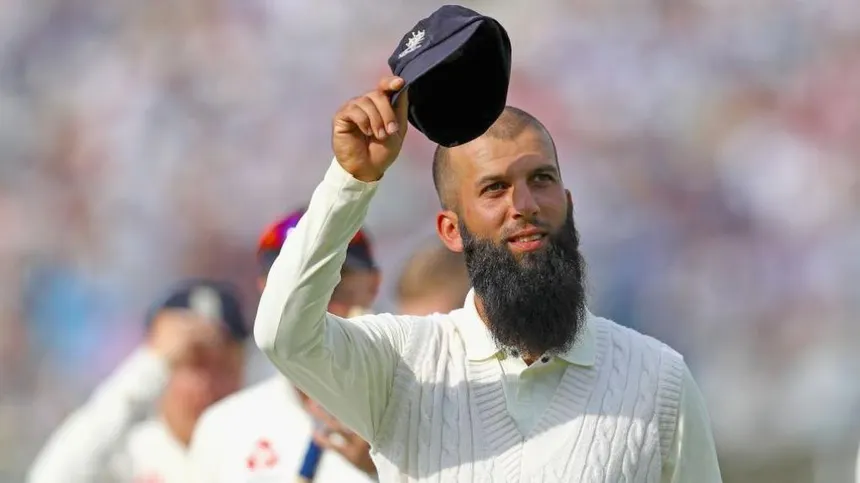
Former England all-rounder Moeen Ali has strongly criticised cricket’s governing structures over the ongoing Mustafizur Rahman IPL controversy, calling the entire episode “very rubbish” and condemning the growing influence of politics in sporting decisions. Moeen’s blunt remarks have added a high-profile international voice to an issue that has already spilled beyond cricket into diplomacy and governance.
At the heart of the controversy is Mustafizur Rahman’s release from his IPL contract following administrative intervention, a move that sparked outrage in Bangladesh and triggered a chain reaction involving league eligibility, broadcast disputes, and international tension. Moeen Ali’s comments cut through the noise, questioning why players are repeatedly caught in the middle of decisions driven by institutions rather than cricketing logic.
Moeen did not mince his words. He argued that cricket boards and governing bodies are increasingly failing players by allowing political considerations to override sporting fairness. According to him, when off-field agendas dictate on-field opportunities, the credibility of competitions suffers — and players pay the price.
The former England vice-captain’s frustration reflects a broader sentiment among current and retired cricketers. Franchise leagues like the IPL thrive on clarity of contracts and freedom of movement, yet the Mustafizur case has exposed how fragile those principles become when national boards intervene mid-cycle. Moeen’s criticism was less about one player and more about a system that lacks transparency and consistency.
What has particularly bothered observers is the financial aspect. Reports suggesting that Mustafizur may not receive compensation after his IPL release have intensified criticism. Moeen highlighted this imbalance, stressing that players are often expected to honour contracts strictly, while boards and organisers escape accountability when circumstances change. In his view, that double standard is unsustainable.
Moeen also warned that repeated political interference risks damaging cricket’s global ecosystem. Franchise leagues rely on trust between boards, players, and organisers. When that trust erodes, players may become hesitant to commit, sponsors may rethink investments, and fans are left questioning whether decisions are being made for the good of the game or external interests.
The timing of Moeen’s remarks is significant. With Bangladesh reportedly taking strong political steps linked to the Mustafizur situation, including broadcast-related decisions, the controversy has moved well beyond administrative disagreement. Moeen’s intervention reframes the issue as a governance failure rather than a bilateral dispute.
Importantly, Moeen did not single out one board alone. His criticism was directed at cricket’s power structure as a whole, suggesting that the sport lacks a strong, neutral framework to protect players when national interests collide. That observation resonates in an era where franchise cricket is global, but governance remains fragmented.
For Mustafizur Rahman, the fallout continues. While his move to another league keeps him playing, the uncertainty surrounding his IPL exit has left lingering questions about player rights and compensation. Moeen’s comments amplify those concerns, pushing them into the international spotlight.
12BET Shortlisted for Sportsbook Operator of the Year at SBC Awards 2025