

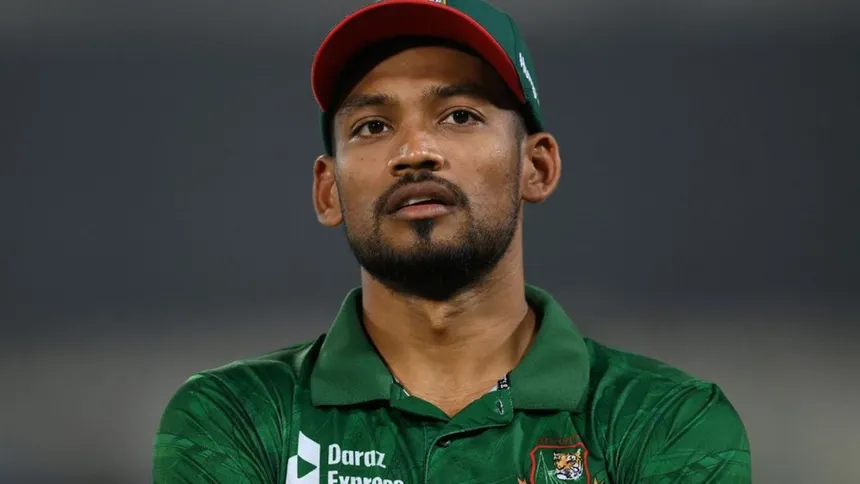
Bangladesh captain Najmul Hossain Shanto has openly acknowledged that the ongoing internal disputes within Bangladesh cricket, combined with uncertainty over venues, are negatively affecting the morale of the national team. In unusually candid remarks, Shanto also took aim at what he described as confusing and unhelpful rhetoric from the board, signalling growing frustration within the dressing room during a sensitive period for Bangladesh cricket.
Shanto’s comments come at a time when Bangladesh cricket is facing turbulence on multiple fronts. Administrative disagreements, public messaging clashes, and unresolved venue concerns — particularly surrounding major ICC events — have created an atmosphere of uncertainty. According to the captain, these issues are no longer confined to boardrooms and press briefings but are spilling directly into the team environment.
Speaking about the impact on players, Shanto admitted that constant speculation and mixed signals from officials make it difficult for the squad to stay fully focused on cricket. He stressed that players are professionals and committed to performing, but repeatedly dealing with off-field noise takes an emotional and mental toll, especially during international tours and high-stakes tournaments.
One of the key concerns highlighted was the lack of clarity around venues. Shanto explained that preparation becomes complicated when players are unsure where matches will be played or what conditions to expect. For a team that relies heavily on planning — particularly bowlers who tailor their strategies to pitches — such uncertainty disrupts preparation cycles and confidence.
The Bangladesh skipper was particularly critical of public statements made by cricket administrators, suggesting that strong rhetoric without clear follow-through only deepens confusion. While stopping short of naming individuals, Shanto made it clear that players feel caught between diplomatic tensions and cricketing responsibilities, a position he believes is unfair on the squad.
Despite the criticism, Shanto was careful to reaffirm the team’s commitment to representing Bangladesh with pride. He emphasized that players continue to train hard and support one another internally, even as external pressures mount. However, he warned that sustained instability could have long-term consequences if not addressed swiftly and transparently.
Leadership within the squad has reportedly shifted toward damage control — keeping players mentally aligned and shielding younger members from distractions. Shanto acknowledged that part of his role as captain now involves managing uncertainty, reassuring teammates, and maintaining unity when external narratives threaten to divide focus.
Former players and analysts have largely supported Shanto’s honesty, noting that such openness from a sitting captain reflects deeper systemic strain. While public criticism from captains is rare in Bangladesh cricket, many believe the situation has reached a point where silence would be more damaging than speaking out.
The broader concern is timing. With major international assignments and ICC tournaments on the horizon, Bangladesh cannot afford prolonged instability. Shanto’s remarks suggest that unless communication improves and disputes are resolved internally, performance on the field could suffer — not due to lack of talent, but because of fractured alignment between players and administrators.
In closing, Shanto called for unity and clarity, urging decision-makers to consider the players’ perspective before escalating disputes publicly. His message was clear: cricketing success requires alignment from top to bottom, and until that happens, morale will remain under pressure.
The captain’s comments mark a significant moment in Bangladesh cricket — a reminder that while politics and administration may shape the game behind the scenes, it is the players who ultimately bear the consequences on the field.
12BET Shortlisted for Sportsbook Operator of the Year at SBC Awards 2025