

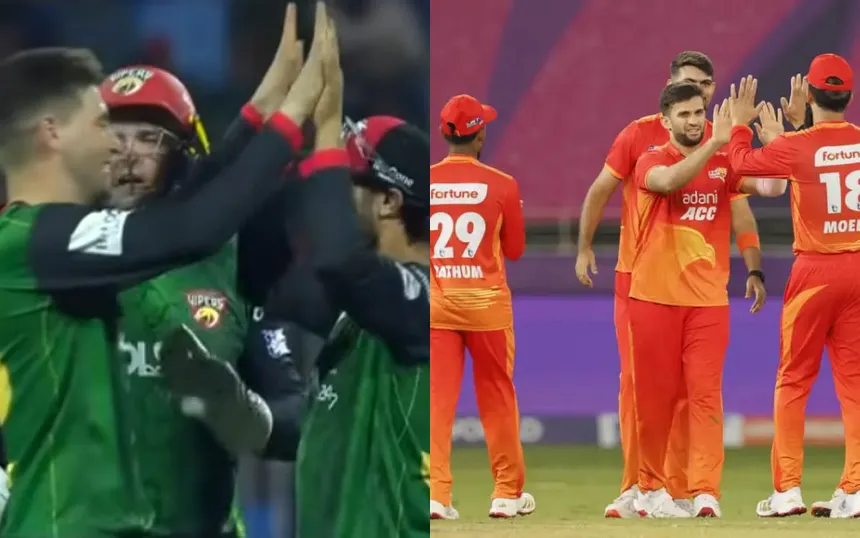
In a high-octane ILT20 2025-26 clash, the Gulf Giants’ innings was powered by an aggressive start from Pathum Nissanka and a brisk contribution from Rahmanullah Gurbaz — yet their combined firepower wasn’t enough to override the comeback by Desert Vipers. Their 56 (29) and 41 (31) respectively gave hope, but the Vipers held their nerve and claimed victory after a Super Over.
From the moment the Giants elected to bat, Nissanka made intent clear. His 56 off just 29 balls was a characteristically aggressive yet controlled knock. With firm drives, pull shots, and clean timing, Nissanka punished early loose deliveries and forced the bowlers onto the back foot. In T20, where striking hard early often dictates the mid-innings tempo, his cameo laid the foundation for what looked like a competitive total. He didn’t hang around for milestones; instead, he walked away having set the platform for the middle and lower order to build on.
At the other end, Gurbaz played with similar intent. His 41 off 31 balls may not have blazed with the same aggression as Nissanka’s, but it added stability during a critical phase. By rotating strike, working gaps, and punishing anything loose, Gurbaz helped prevent the pressure from creeping in during the middle overs. Their partnership navigated the tricky middle-phase conditions — where spin and variation threatened to squeeze momentum — and kept the scoreboard ticking at a healthy clip.
Thanks to those two innings, the Giants ended with 179/5 — a total that, under many circumstances, would have been defensible. With dew likely, relatively flat batting surfaces, and night conditions favouring batsmen, 179 looked like a par score at worst, and a match-winning one at best. Their top-order firepower had delivered on intent and execution, and fans expected bowlers and fielders to back up the batters and defend the total.
However, the Vipers had different plans. Their chase — full of pressure, ebbing and flowing momentum, and nerves — demanded more than just reacting. It demanded composure, resilience, and the ability to stay calm under the kind of tension that sees matches go either direction at the very edge. And that’s exactly what they delivered. Despite losing wickets at intervals and facing death-over pressure, their batters held on, kept rotating strike, punished the bad balls, and dragged the contest to a Super Over — thanks in part to the strong foundation laid by Nissanka and Gurbaz.
In the Super Over that followed, the Vipers executed better under pressure. The margin was slim, the stakes were high — but the game tilted in their favour through calmness, smart bowling plans, and clutch execution. The Giants’ early aggression wasn’t enough when faced with disciplined, fight-back batting and tight death-over bowling.
For the Giants, this result will sting. Their opening stand had given fans faith — but in T20, especially in leagues like ILT20, early starts are only half the battle. Execution with the ball, fielding under pressure, and guarding against late-over collapses matter just as much. On this day, those parts didn’t click — and the Vipers capitalized beautifully.
Nissanka and Gurbaz showed why they remain dangerous T20 batters. Their intent, timing, and shot selection delivered exactly what a good top-order needs to: platform and momentum. But cricket is rarely as simple as good batting alone. The Desert Vipers reminded everyone of that truth. On this night, temperament, teamwork and tactical execution trumped fireworks.
12BET Shortlisted for Sportsbook Operator of the Year at SBC Awards 2025