

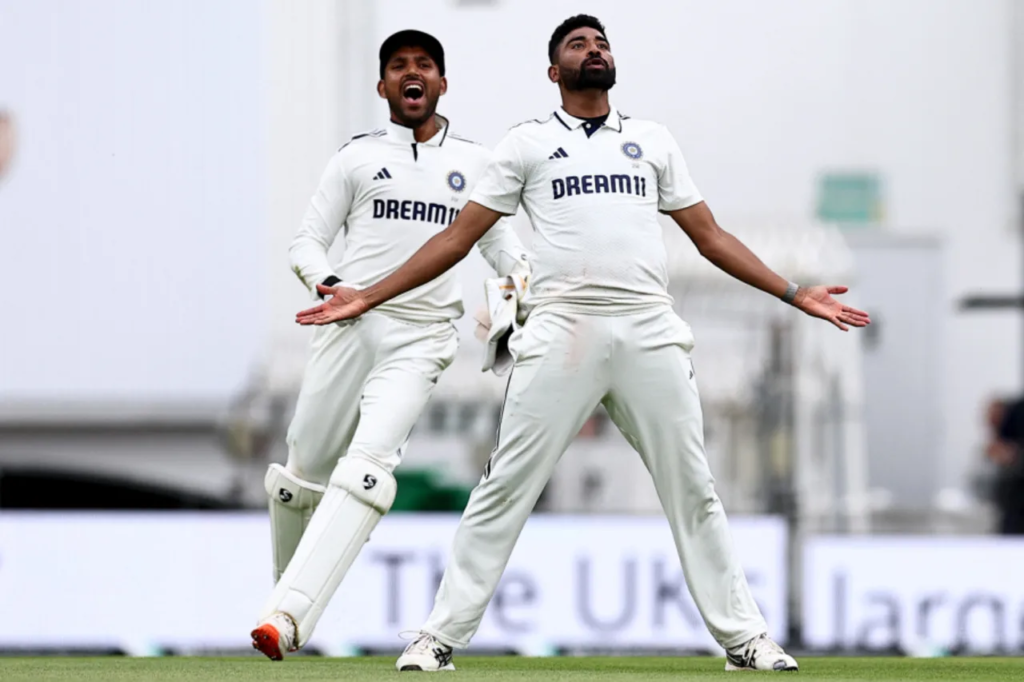
Oval win sign of bigger things to come for India in Test Cricket, proving themselves capable of filling the shoes of their former mates.
India’s win at The Oval might herald a golden era for them.
Over the years, test cricket has a way of reverberating. For those of us who participated in or saw pivotal events in cricket history, some performances bring back memories of those times when a team not only wins a game but also declares a new identity. One such instance was India’s incredible comeback triumph over England at The Oval in the last Test of the 2025 series.
Against all odds, to tie the series 2-2 at one of England’s most famous stadiums (and one of India’s favourite hunting grounds!) after falling behind 2-1! wasn’t just about square scores. It was a statement of intent. It reminded very clearly of Australia’s Ashes draw in 1972 under Ian Chappell. Australian cricket saw a generational transition that would influence the next ten years after the final game of the series, which was likewise played at The Oval and was played to level a series.
In 2025, India will be at a similar turning point. R Ashwin, Virat Kohli, and Rohit Sharma are not present. Instead of only covering gaps, their replacements filled their boots and proceeded to make new ones. When given the captaincy, Shubman Gill contributed a composed authority and a youthful boldness.
He seemed to alter the bowling by the clock and occasionally let the game veer off course, but if given the right assistance both on and off the pitch, he will develop rapidly in the position. Though he now has the status to be more assertive at the selection table, his use of the few bowling resources available to him was occasionally quixotic.
Gill’s performance was nothing short of amazing. Yashasvi Jaiswal performed with grace and skill. KL Rahul and Ravindra Jadeja contributed expertise and dependability, while Rishabh Pant offered steel and spark. I expect Washington Sundar to play more than 50 Test matches and would be shocked if he didn’t become the team’s best all-around player.
Then Mohammed Siraj appeared. It is a mental, emotional, and physical marathon to bowl more than 185 overs in five Test matches over six weeks under any circumstances. It is almost Herculean to do so with constant vigour while carrying the assault for extended periods of time without Jasprit Bumrah.
Siraj’s journey is one of emotional, mental, and physical resiliency. This man wears his feelings on his sleeve, has carried pain in public, and uses cricket as a way to express all of his feelings. He bowled with a sense of possession, but he also knew how to pace himself and recognise the important moments.
The evolution was more impressive than the enormous amount of work. He began as a passionate bowler. He concluded as a bowler with passion and purpose. That’s what separates a leader from a player.
For a sport that feeds on cycles and legacies, the echoes from The Oval – from 1972 to 2025 – may prove to be uncanny.
The torch has been handed over. This bold young Indian team, which includes Siraj, Pant, Jaiswal, Washington, and Gill, is eager to run with it.