

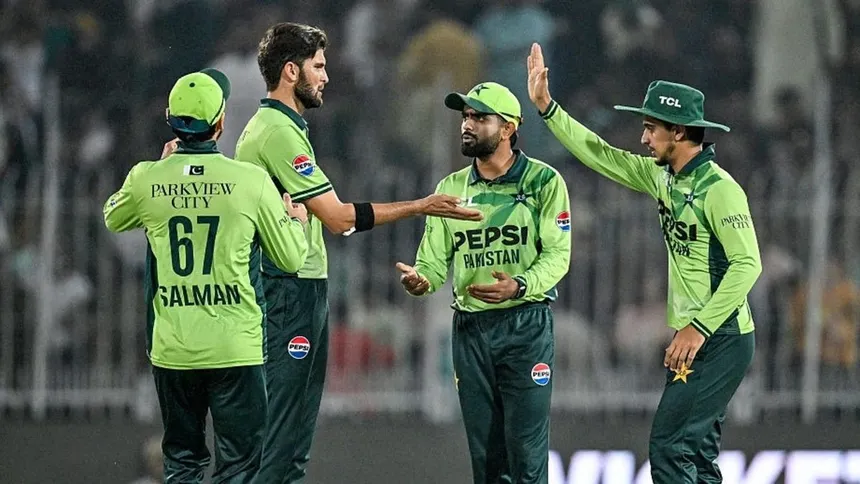
Pakistan’s men’s team has been hit with a 20% match-fee deduction after being found guilty of maintaining a slow over-rate in the first ODI against Sri Lanka in Rawalpindi. Match referee Ali Naqvi imposed the sanction after determining that Pakistan fell four overs short of the required rate once all allowable time adjustments were factored in. Under ICC regulations, teams are fined 5% of their match fee for every over they fail to bowl in time, and Pakistan’s shortfall triggered the full 20%.
The match officials—including the on-field umpires Alex Wharf and Asif Yaqoob, along with third umpire Sharfuddoula and fourth umpire Rashid Riaz—reported the violation following the conclusion of the match. Pakistan captain Shaheen Afridi accepted the decision immediately, meaning no formal hearing was needed. It was a straightforward application of ICC playing conditions: if a team does not complete its overs within the allotted period, sanctions follow automatically unless mitigating circumstances are proven.
The timing of the penalty is notable because Pakistan actually won the game, edging Sri Lanka by six runs in a close, high-pressure contest. Pakistan posted 299 for 5 and held their nerve in the final overs to secure a narrow victory. The intensity of the match, however, did not excuse the slow rate. Over-rate enforcement has become a major ICC priority because delays impact broadcast windows, stadium operations, and overall fan experience. Governing bodies have become far less tolerant of sluggish play, especially with the increasing commercial and scheduling demands of international cricket.
For Pakistan, this fine is a reminder that discipline goes beyond wickets and runs. Maintaining the flow of play is now a non-negotiable part of leadership for captains—one that carries financial consequences and, in repeated cases, potential suspension. While this particular offense resulted only in a monetary penalty, the message is clear: teams must manage field settings, bowling changes, and strategic breaks more efficiently.
There are also performance implications. Slow over-rates often reflect deeper issues such as inconsistent bowling rhythms, over-frequent tactical conversations, or avoidable delays between deliveries. In tight ODI schedules, these inefficiencies can sap momentum and place unnecessary pressure on bowlers. With Pakistan trying to stabilise their white-ball performances and build toward upcoming series, maintaining sharper match discipline becomes essential.
The fine does not overshadow the fact that Pakistan began the series with a win, but it does highlight an ongoing area of concern. Over-rate penalties have been increasingly common in international cricket, affecting top teams across formats. The ICC has made it clear that strict enforcement will continue, and teams that fail to adjust will pay the price—financially and competitively.
For now, Pakistan will move on with the series, but the leadership group will be expected to tighten up game management immediately. A repeat offense would reflect poorly on the side and could escalate the consequences. In modern cricket, the margins between success and setback extend far beyond the scoreboard, and Pakistan just received another reminder of that reality.
12BET Shortlisted for Sportsbook Operator of the Year at SBC Awards 2025