

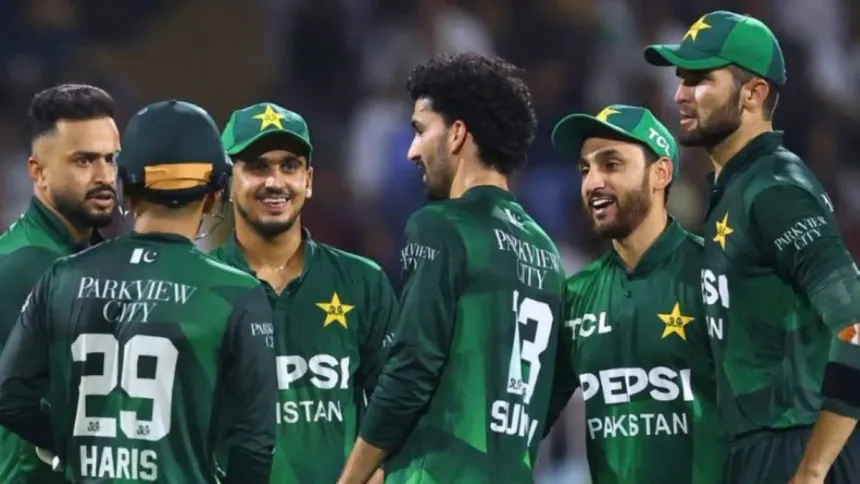
Pakistan’s Asia Cup campaign took another dramatic twist late Tuesday night when a team spokesperson circulated WhatsApp messages to domestic reporters, stating that the decision to continue participating in the tournament — and the PCB’s approach to the ongoing match referee controversy — was now under government consultation. This message has heightened anticipation ahead of Pakistan’s next match, as fans and analysts wait for an official verdict.
The controversy stems from India’s refusal to shake hands with Pakistan at the toss and after the match in their recent Asia Cup encounter. The Pakistan Cricket Board (PCB) reacted strongly, filing a complaint with the ICC and demanding that match referee Andy Pycroft be removed for allegedly failing to enforce the spirit of cricket. The ICC reportedly rejected this demand, leaving Pakistan in a tough spot: either accept Pycroft’s presence or risk sanctions by refusing to play.
The late-night communication suggested that Pakistan is weighing its next steps carefully. The PCB emphasized that “consultations are underway” and that any decision would be made “in the best interests of Pakistan.” The timing of the message, shared well past midnight, underlines the urgency of the issue and the level of political involvement. Reports also indicated that Pakistan canceled its pre-match press conference, possibly to avoid giving away its stance too soon.
Behind the scenes, one proposal being discussed is to have a different match referee appointed for Pakistan’s upcoming clash against UAE, potentially as a compromise to defuse tensions. Richie Richardson’s name has been mentioned as a possible replacement for Pycroft, though no official confirmation has been made.
The situation has far-reaching implications. If Pakistan refuses to play, they could face an automatic forfeit, losing crucial points that would almost certainly end their Asia Cup campaign. It could also lead to financial penalties and strain relations with the Asian Cricket Council (ACC) and ICC. On the other hand, simply backing down without concessions risks angering the Pakistani public, who expect a firm response after what has been framed domestically as a slight.
For the players, the uncertainty adds to the mental pressure already created by the high-profile India-Pakistan fixture. Team management is reportedly working hard to shield the squad from distractions, ensuring that focus remains on cricket rather than off-field politics.
As of Wednesday morning, no final decision has been announced, but the PCB’s message makes it clear that the outcome will balance competitive priorities with symbolic protest. Whatever choice is made, it could set a precedent for how cricket boards handle similar flashpoints in the future — where sport, politics, and diplomacy collide. The cricketing world now waits for Pakistan’s official word, with their Super 4 qualification hopes hanging in the balance.
12BET Shortlisted for Sportsbook Operator of the Year at SBC Awards 2025