

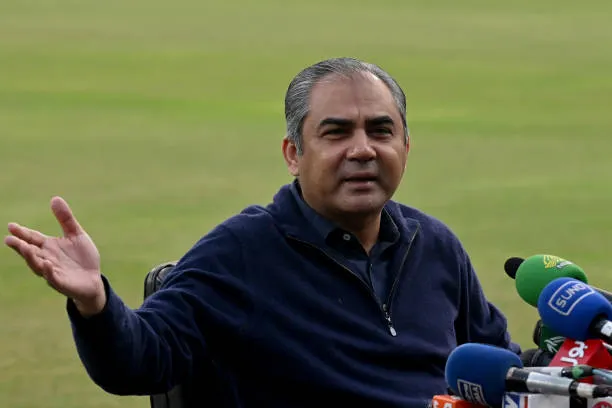
Pakistan Cricket Board chairman Mohsin Naqvi finally arrived in Dubai to attend the ongoing International Cricket Council (ICC) Board meeting, after initial uncertainty surrounding his participation. His delayed arrival came at a critical juncture, as informal discussions among member boards were already in progress, including those involving the Board of Control for Cricket in India (BCCI).
Naqvi’s attendance carries significant weight, given his dual responsibilities as both PCB chief and president of the Asian Cricket Council (ACC). The meeting, which convened key cricket administrators from around the world, has been overshadowed by the unresolved Asia Cup trophy dispute between India and Pakistan. Naqvi’s presence signals Pakistan’s intent to engage directly in the matter after weeks of silence.
Reports suggest that Indian officials had already initiated preliminary discussions with ICC representatives before Naqvi’s arrival, focusing on administrative coordination and the symbolic handover of the Asia Cup trophy. His late entry meant joining a conversation already in motion, leaving Pakistan slightly on the back foot in terms of influence over the narrative.
The Asia Cup issue remains at the center of attention. Tensions flared earlier when the Indian team declined to receive the trophy from Naqvi following the tournament’s conclusion, prompting a diplomatic standoff that spilled into cricket’s governing corridors. With the trophy still held at the ACC headquarters in Dubai, the ICC meeting is viewed as an opportunity to negotiate a resolution and restore normalcy between the boards.
Sources indicate that Naqvi and BCCI secretary Devajit Saikia held a side meeting facilitated by ICC officials soon after his arrival. Early signs were reportedly positive, with both sides agreeing to maintain dialogue in what has been described as a “cordial and constructive” exchange. While no official announcement has been made, the tone of discussions suggested the possibility of easing tensions between the two boards.
The timing of Naqvi’s participation, however, has raised eyebrows. His absence from earlier ICC sessions and the delay in reaching Dubai drew criticism from within Pakistan’s cricketing circles, with concerns that it might weaken PCB’s voice on important issues such as scheduling, funding allocations, and representation in future tournaments. Nevertheless, his eventual appearance reaffirmed Pakistan’s commitment to remaining active in international governance.
Beyond the Asia Cup dispute, the ICC Board meeting is also addressing broader issues such as bilateral scheduling conflicts, player workload management, and global tournament coordination. Naqvi’s attendance ensures that Pakistan remains part of these strategic conversations, especially as the next ICC cycle approaches.
His engagement also underscores the political undertones shaping cricket’s administration today. In an era when sporting diplomacy between India and Pakistan remains fragile, Naqvi’s participation is not just about policy—it’s a signal of Pakistan’s willingness to stay engaged, even amid tension.
In the coming days, all eyes will be on whether Naqvi’s late but meaningful intervention helps unlock progress on the Asia Cup dispute. His arrival in Dubai marks a renewed push for dialogue, as cricket’s governance and geopolitics once again intertwine under the spotlight of the ICC’s highest table.
12BET Shortlisted for Sportsbook Operator of the Year at SBC Awards 2025