

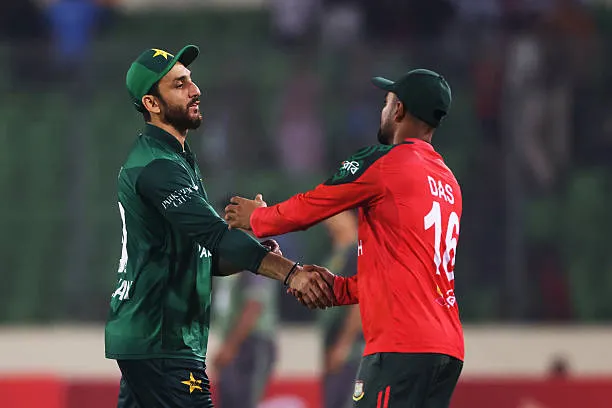
The Pakistan Cricket Board has emerged as a potential alternative host for Bangladesh’s matches in the ICC Men’s T20 World Cup 2026, as uncertainty continues over venues amid an ongoing dispute involving the Bangladesh Cricket Board, the ICC, and host nation India. The development adds another layer of complexity to an already tense situation, blending cricket administration with diplomatic sensitivities.
The T20 World Cup 2026 is scheduled to be hosted primarily in India, with Sri Lanka also set to stage a portion of the tournament. However, Bangladesh have raised repeated concerns over playing their matches in India, citing security assurances, political considerations, and what they describe as an uncomfortable environment for their team and officials. Despite multiple representations to the ICC, the global body has so far maintained that the agreed hosting structure should remain unchanged.
Against this backdrop, the PCB’s expression of interest in hosting Bangladesh’s fixtures has drawn attention across the cricketing world. Pakistan’s stance is being viewed as both a gesture of regional support and a strategic move to reinforce its relevance in global cricket hosting. Pakistan has successfully staged major international events in recent years, including Asia Cup matches, bilateral series, and parts of ICC tournaments, which the PCB believes strengthens its case as a reliable and secure venue.
Sources close to the matter suggest the PCB has informally communicated to the ICC that it would be open to hosting Bangladesh’s group-stage matches or even knockout fixtures, should a neutral venue solution be required. From Pakistan’s perspective, hosting World Cup matches would not only enhance its international standing but also provide commercial and sporting benefits, including packed stadiums and strong television interest.
For Bangladesh, the proposal offers an alternative that may be more acceptable than playing in India, given historical sporting ties and fewer off-field tensions with Pakistan at present. However, any such move would require ICC approval and agreement from the primary hosts, making it far from straightforward. The ICC has already warned Bangladesh that refusing to play scheduled matches could result in forfeited points, a stance that underlines its reluctance to alter tournament logistics.
India’s cricket authorities, meanwhile, are understood to be firm on retaining hosting rights as originally allocated. From their point of view, changing venues at this stage could set a precedent that complicates future ICC events, especially when political or diplomatic issues arise. The ICC shares similar concerns, prioritizing consistency, contractual obligations, and tournament integrity.
Cricket analysts note that while the PCB’s offer is significant, it may ultimately serve more as a pressure point in negotiations rather than a likely outcome. Relocating matches would involve revising broadcast plans, sponsorship agreements, travel logistics, and security protocols — all of which are costly and time-consuming.
Still, the PCB’s willingness highlights the broader geopolitical undercurrents that often shape international cricket. As the T20 World Cup approaches, the ICC faces a delicate balancing act: accommodating genuine concerns raised by a member board without undermining the authority of the host nation or the tournament structure.
With months still remaining before the event, discussions are expected to continue behind closed doors. Whether Pakistan’s offer evolves into a formal proposal or remains a symbolic gesture, it has undeniably intensified the conversation around venue neutrality and the growing intersection of cricket and diplomacy.
12BET Shortlisted for Sportsbook Operator of the Year at SBC Awards 2025