

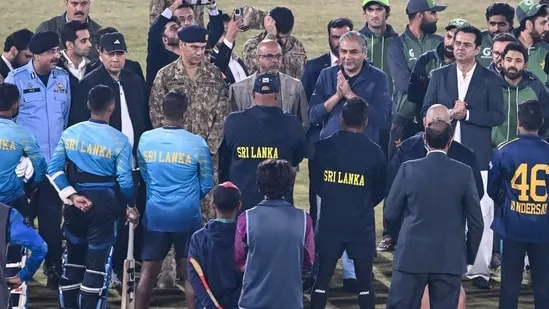
Pakistan has gone into full crisis-management mode to protect the visiting Sri Lankan cricket team after the Islamabad suicide bombing. The PCB, the government, and the military are treating the team like state guests, rolling out one of the most extensive security operations seen in Pakistan’s cricketing history. PCB Chairman Mohsin Naqvi has been at the center of the response, meeting the Sri Lankan squad in person to deliver firm assurances that their safety is the nation’s top priority.
Following the bombing, Pakistan deployed Army units, Rangers, and reinforced police contingents to guard the Sri Lankan team around the clock. Armored vehicles, armed escorts, and secure-route convoys now handle every movement between hotel, training sessions, and the match venue. Layered protection has been built around the team’s accommodations, featuring controlled access points, heavy surveillance, and coordinated response teams.
Naqvi’s personal involvement has been unusually direct. He spoke one-on-one with Sri Lankan players and support staff, addressing their concerns head-on and explaining the upgraded safeguards. He emphasized that Pakistan was treating the matter with absolute seriousness, ensuring that no gaps remained in the security blueprint. His message was consistent: the tour will continue, and the players will be protected at the highest possible level.
Diplomatic support has reinforced these efforts. The Sri Lankan High Commissioner in Pakistan publicly expressed satisfaction with the arrangements, a key factor in stabilizing the situation. On the Pakistani side, high-ranking military leadership—including Field Marshal Asim Munir—intervened behind the scenes to guarantee complete cooperation from security agencies. This high-level political-military alignment helped reassure Sri Lanka Cricket that the tour could proceed without further disruption.
Inside the Sri Lankan camp, initial anxiety was strong. Several players reportedly voiced their fears and questioned whether the tour should continue. Captain Charith Asalanka and others were visibly tense after the bombing and the immediate uncertainty that followed. However, discussions with PCB officials, as well as informal conversations with senior Pakistani players, played a role in easing nerves. Pakistan’s cricketers stepped in as well, offering personal reassurances and urging their Sri Lankan counterparts to trust the measures being taken.
Sri Lanka Cricket ultimately confirmed the continuation of the series, while also stating that any player choosing to withdraw would be replaced and evaluated later. That firm stance signaled both a commitment to finishing the tour and confidence in Pakistan’s security apparatus.
The entire episode has once again placed a spotlight on Pakistan’s determination to maintain international cricket despite ongoing security challenges. The country has faced setbacks in the past, most famously the 2009 Lahore attack, which still shapes how security planning is approached today. This time, the rapid response, unified leadership, and transparent engagement appear to have steadied the situation quickly.
With the upgraded protections in place, the Sri Lankan team has resumed its matches. Pakistan’s authorities continue to stress that their security is being handled with maximum vigilance, aiming to ensure the tour ends safely—and to reinforce trust for future international visits.
12BET Shortlisted for Sportsbook Operator of the Year at SBC Awards 2025