

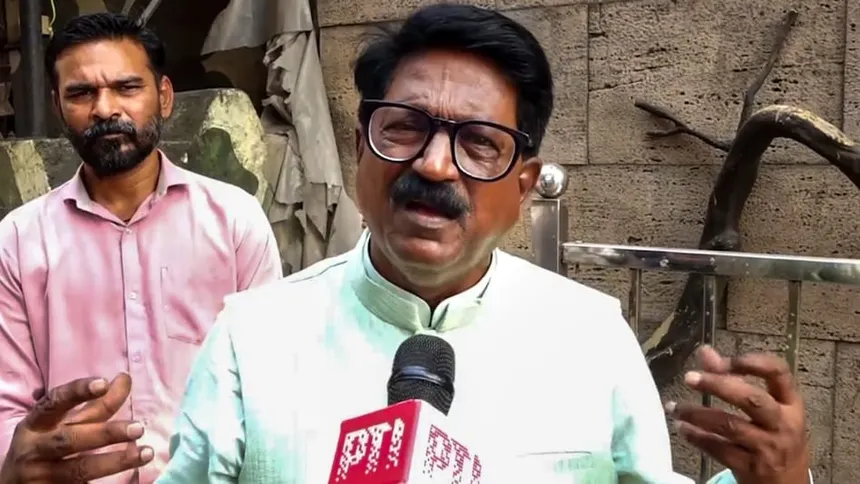
The upcoming India–Pakistan match in the Asia Cup has become the center of a heated political debate in India. Lok Sabha MP Arvind Sawant of the Shiv Sena (UBT) has publicly urged the government not to allow the match, citing national security and ongoing geopolitical tensions. The Chandigarh Congress echoed the sentiment, arguing that staging the fixture during a period of heightened conflict is inappropriate and could have financial and moral consequences.
Sawant, speaking during parliamentary discussions on national security, stated that cricketing ties with Pakistan would send the wrong message in the wake of recent terror attacks and military operations. He emphasized that the sacrifices of Indian soldiers would be undermined if India engaged in what he called “friendly sporting ties” with a nation linked to cross-border aggression. For him, the issue is not about sport but about prioritizing the country’s dignity and the emotions of its citizens over commercial and entertainment interests.
The Chandigarh Congress added another layer to the opposition by highlighting the economic aspect. They argued that any India–Pakistan match inevitably channels revenue to the Pakistan Cricket Board, which they claim could indirectly benefit networks hostile to India. Their statement also invoked a moral principle: “terror and sports cannot go together.” According to them, hosting the match, even on neutral ground, sends a contradictory signal when the nation is still dealing with the aftermath of violence and military escalation.
This debate has reignited the long-standing question of whether sports can remain separate from politics in the context of India–Pakistan relations. While the Board of Control for Cricket in India (BCCI) typically operates independently, high-profile fixtures involving Pakistan often carry diplomatic weight. Critics of the opposition argue that cricket should act as a bridge in times of tension and that neutral venues mitigate direct political implications. Supporters of the boycott, however, stress that symbolic gestures matter and that scheduling such matches risks appearing insensitive to national sentiment.
So far, the central government has not announced any decision to intervene, and the match remains scheduled to take place in the UAE under Asia Cup arrangements. Yet, the political pressure highlights how deeply cricket is intertwined with national identity in the subcontinent. With multiple voices calling for cancellation, the fate of the fixture remains uncertain and continues to spark debate across party lines and among the public.
At its core, the controversy underscores the unique weight India–Pakistan cricket carries. It is more than just a sporting contest; it is a reflection of diplomatic signals, public sentiment, and national pride. Whether the match goes ahead or is scrapped, the discussion around it demonstrates that for both nations, the cricket field is often as politically charged as the diplomatic table.