

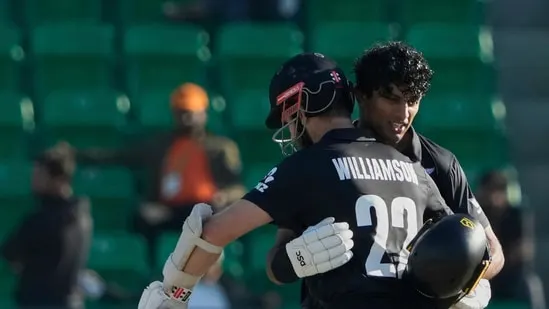
New Zealand’s batting effort in the 2nd T20I against India at Raipur had its moments of promise, with Rachin Ravindra (44) and Tim Seifert (24) making useful contributions, but the innings ultimately lacked the sustained firepower needed to truly challenge India. Despite crossing the 200-run mark and finishing on 208/6, the Kiwis were left feeling they were 15–20 runs short on a surface that heavily favoured batting.
Asked to set a target, New Zealand began with positive intent, knowing that anything under 200 would likely be below par. Rachin Ravindra once again looked comfortable at the top, continuing his rise as a dependable all-format batter. His 44 was composed yet purposeful, blending clean strokeplay with intelligent strike rotation. Ravindra handled both pace and spin with assurance, ensuring New Zealand stayed ahead of the run rate during the early and middle phases.
However, Ravindra’s dismissal proved a turning point. While his innings provided stability, it did not translate into a dominant platform for a massive finish. New Zealand were unable to convert the solid start into a truly commanding middle-overs surge, largely due to regular wickets disrupting momentum.
Tim Seifert’s contribution of 24 was brief but important in keeping the innings ticking. He played with aggression, looking to unsettle India’s bowlers, but his stay at the crease was cut short just as he appeared ready to accelerate. Seifert’s dismissal added to a pattern that defined New Zealand’s innings — starts without decisive conversion.
The middle overs became a period of consolidation rather than domination. India’s bowlers, particularly the spinners, applied enough control to prevent New Zealand from stringing together a long, match-defining partnership. While the scoring rate remained healthy, it never spiraled out of India’s control.
It took Mitchell Santner’s late charge (47 off 27 balls) to lift New Zealand past the 200 mark. His counterattacking knock injected urgency into the innings and gave the total some respectability. Without Santner’s contribution, New Zealand may well have fallen short of even a competitive score.
Still, the broader issue for New Zealand was clear. On a pitch where India would later chase at record pace, the lack of a single innings crossing fifty from the top order hurt badly. Ravindra’s 44 was the highest among the specialist batters, and while contributions were spread out, none were decisive enough to seize control of the match.
India’s bowling, led by timely wickets and smart use of spin, ensured New Zealand were never fully comfortable. Kuldeep Yadav’s breakthroughs in the middle overs, in particular, prevented Ravindra or Seifert from anchoring a longer partnership that could have pushed the total closer to 225.
In hindsight, 208/6 was competitive but not intimidating. Against a batting lineup in the form India are currently showing, New Zealand needed either a bigger powerplay or a more explosive middle phase — ideally both.
Ravindra and Seifert can take confidence from their contributions, but New Zealand will know that in this series, good starts are no longer enough. To challenge India, they will need someone to turn intent into dominance — and set totals that genuinely test one of the most destructive chasing sides in modern T20 cricket.
12BET Shortlisted for Sportsbook Operator of the Year at SBC Awards 2025