

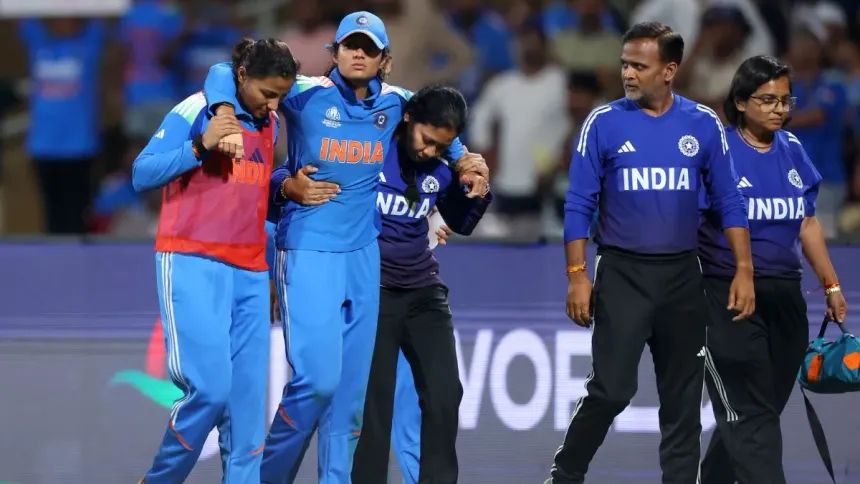
The controversy surrounding Pratika Rawal’s delayed World Cup winner’s medal has reopened debate over eligibility rules, fairness, and inclusivity in modern sport. Rawal, one of India’s most consistent performers during the 2025 ICC Women’s Cricket World Cup, was initially denied her winner’s medal due to technical eligibility criteria. Her eventual recognition, following direct administrative intervention, has highlighted the flaws in how governing bodies define contribution and success.
Rawal’s case is simple yet revealing. Despite playing a major role in India’s victorious campaign — including several match-winning knocks and key partnerships — she was sidelined by injury before the final stage of the tournament. Because of her replacement, the official regulations excluded her from the list of recipients entitled to medals. The rule, designed to maintain administrative consistency, effectively punished a player for circumstances beyond her control.
This sparked backlash from players, fans, and analysts alike, who questioned the fairness of a system that rewards presence over performance. In the end, intervention from senior cricket administrators ensured Rawal received her medal, but the episode exposed the rigidity and outdated nature of some eligibility frameworks. It also raised concerns about the arbitrariness of decision-making when exceptions are made only after high-level involvement.
At the heart of the issue is a larger question: what defines contribution in team sport? Is it limited to those who appear in a final, or should recognition extend to those whose performances were instrumental in getting the team there? Rawal’s omission was a reminder that sport’s bureaucratic systems often lag behind the spirit of teamwork and inclusivity they claim to uphold.
Injuries, substitutions, and squad rotations are realities of modern competition. Excluding players based on such factors sends the wrong message — that only those on the field during the last match truly “belong” to the win. For athletes, this undermines morale and the collective ethos that teams rely upon. More importantly, it highlights a lack of empathy within administrative structures, where procedural formality overrides human contribution.
Sport at the highest level increasingly emphasises inclusivity and well-being, but recognition systems remain stuck in an older mindset. Governing bodies must rethink their frameworks so that deserving contributors are not forgotten in technicalities. A simple reform — ensuring all players who participated in any stage of a tournament receive medals — could eliminate such controversies in the future.
The Rawal incident also exposes another uncomfortable truth: recognition in sport often depends on visibility and influence. That a top official’s intervention was necessary for a player to receive what she earned shows how fragile fairness can be when it relies on personal discretion instead of clear policy.
Ultimately, the medal row surrounding Pratika Rawal should not just be seen as an administrative oversight but as a wake-up call. True inclusivity in sport demands systems that value every meaningful contribution — not just those that fit neatly within tournament regulations. For the spirit of competition to remain genuine, recognition must extend to every player who helps shape a team’s journey, whether or not they stand on the podium at the end.
12BET Shortlisted for Sportsbook Operator of the Year at SBC Awards 2025