

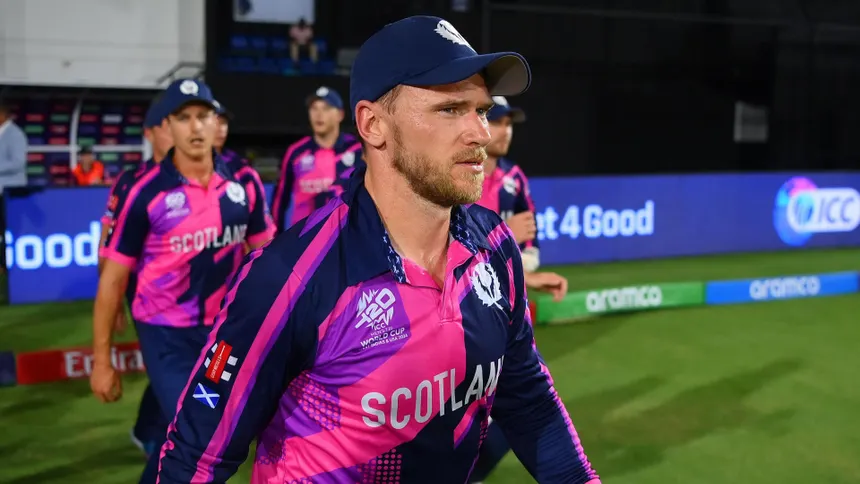
In a dramatic and unprecedented development ahead of the ICC Men’s T20 World Cup 2026, Scotland have officially replaced Bangladesh in the tournament after the International Cricket Council confirmed that the Bangladesh Cricket Board failed to secure a venue shift for its scheduled matches. The decision, announced following weeks of behind-the-scenes negotiations, has sent shockwaves through the global cricket community and significantly altered the tournament landscape.
The controversy stemmed from Bangladesh’s reluctance to play its allotted fixtures in India, one of the co-hosts of the 2026 edition alongside Sri Lanka. The Bangladesh Cricket Board formally requested that its matches be moved to Sri Lanka, citing concerns related to logistics, player comfort, and the broader political climate. However, the ICC maintained that the tournament schedule had been finalized after extensive planning and could not be altered at such a late stage without undermining competitive integrity and operational fairness.
To address the concerns raised, the ICC commissioned multiple independent security and logistical assessments. These evaluations reportedly found no substantial risks that would justify relocating Bangladesh’s matches. With the tournament fast approaching, the ICC issued a final deadline to the BCB, asking for written confirmation of participation under the existing schedule. When that confirmation did not arrive within the stipulated timeframe, the ICC moved to enforce its event regulations.
Under ICC rules, a member board’s failure to commit to participation allows the governing body to invite a replacement team based on qualification pathways and rankings. Scotland, the highest-ranked eligible side not originally in the tournament, were offered the vacant spot. Cricket Scotland accepted the invitation without hesitation, triggering immediate preparations for travel and squad finalization.
For Scotland, the development represents a rare and significant opportunity. While they have featured in previous T20 World Cups, replacing a full member nation like Bangladesh elevates both expectations and visibility. The Scottish side now joins a competitive group that includes established teams and emerging cricketing nations, giving them a platform to showcase their progress on one of the sport’s biggest stages.
Bangladesh’s exit, meanwhile, marks a major setback for a team that has been a regular presence in ICC global events. The BCB has since acknowledged the ICC’s ruling and confirmed it will not pursue a legal or administrative challenge, effectively closing the chapter on a dispute that had grown increasingly tense. Internally, the decision has sparked debate about governance, diplomacy, and the balance between national concerns and international obligations.
The episode has also reignited wider discussions within world cricket about flexibility in scheduling, the influence of geopolitics on sport, and the authority of the ICC over its member boards. While the governing body has emphasized consistency and rule-based decision-making, critics argue that the situation exposes fault lines in how global tournaments are managed.
As the ICC Men’s T20 World Cup 2026 approaches, attention will now shift back to cricketing matters. Scotland’s inclusion adds an element of unpredictability, while Bangladesh’s absence serves as a stark reminder that off-field decisions can carry heavy on-field consequences. The tournament will go ahead as planned, but this episode is likely to be remembered as one of the most contentious build-ups in T20 World Cup history.
12BET Shortlisted for Sportsbook Operator of the Year at SBC Awards 2025