

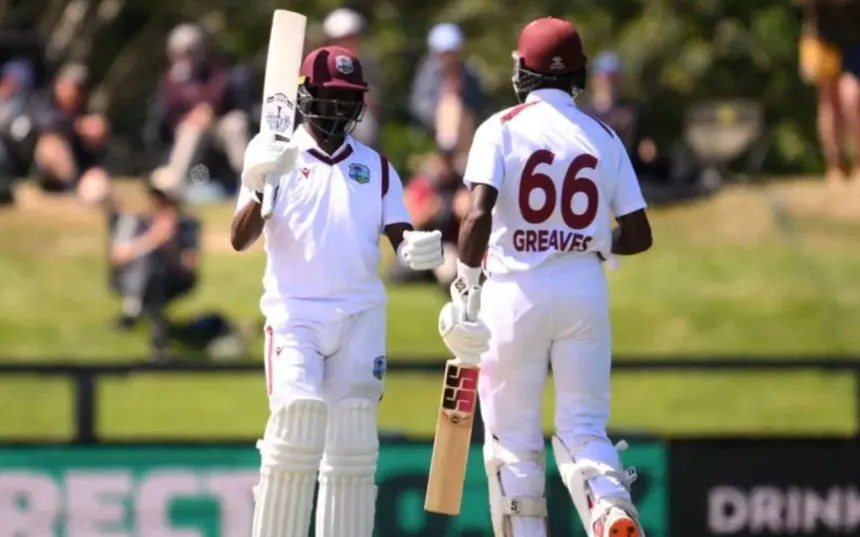
On Day 4 of the Test match, the West Indies produced one of the most remarkable rearguard performances in recent memory. With the visitors staring down the barrel of a heavy defeat, Shai Hope and Justin Greaves combined to deliver an unbeaten 196-run partnership in the fourth innings, defying the bowling attack and forcing a draw in a match that had seemed firmly in the home side’s grasp. Their resilience not only salvaged pride but also etched a memorable chapter in West Indies cricket history.
From the outset, the situation was tense. The West Indies were chasing a challenging target under pressure, with wickets falling at regular intervals. Early strikes by the home team left the visitors in a precarious position, and the probability of a fourth-innings collapse loomed large. It was then that Hope, already experienced and composed in the face of adversity, took command. He displayed a combination of technical skill, patience, and strategic shot selection to absorb pressure while keeping the scoreboard ticking.
Greaves, relatively newer to the rigors of such high-pressure situations, complemented Hope with fearless stroke play. He picked gaps with precision, punished loose deliveries, and rotated the strike intelligently. Together, the pair built a partnership that not only frustrated the bowlers but also slowly shifted the momentum of the final day. Every run seemed to weigh heavily on the home side, as tight fields and attacking plans failed to break through their defense.
Their stand was marked by contrasts: Hope’s calculated, methodical accumulation versus Greaves’ opportunistic aggression. Hope anchored the innings, leaving balls outside off-stump, defending expertly, and punishing only what was in his zone. Greaves injected momentum, often taking the attack to the bowlers, a tactic that relieved pressure on Hope and ensured the partnership progressed steadily. It was a masterclass in partnership cricket — balancing caution and intent, defense and offense, patience and aggression.
The magnitude of the partnership became evident as the hours passed. Overs stretched, the crowd sensed the inevitability of the draw, and the home side’s frustration grew. Attempts to unsettle the batters with short balls, swing, and varying pace were met with calm and precise responses. Boundaries were carefully chosen, singles rotated expertly, and extras exploited sparingly to maintain control. The duo batted not just for runs, but for time, forcing the match to end without a result.
This unbeaten 196-run stand is now among the highest fourth-innings partnerships for the West Indies and is historically significant for its role in securing a draw under immense pressure. It exemplifies the qualities of resilience, mental toughness, and technical skill required to survive in Test cricket’s most challenging scenarios. For the team, it was a morale boost and a lesson in perseverance.
12BET Shortlisted for Sportsbook Operator of the Year at SBC Awards 2025